I seek to empower people by giving them something to ponder.
By Marcial Bonifacio
9/10/26
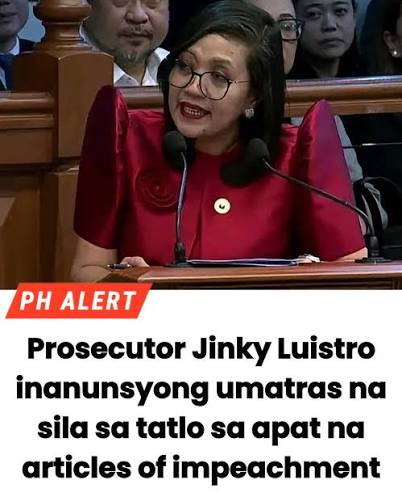
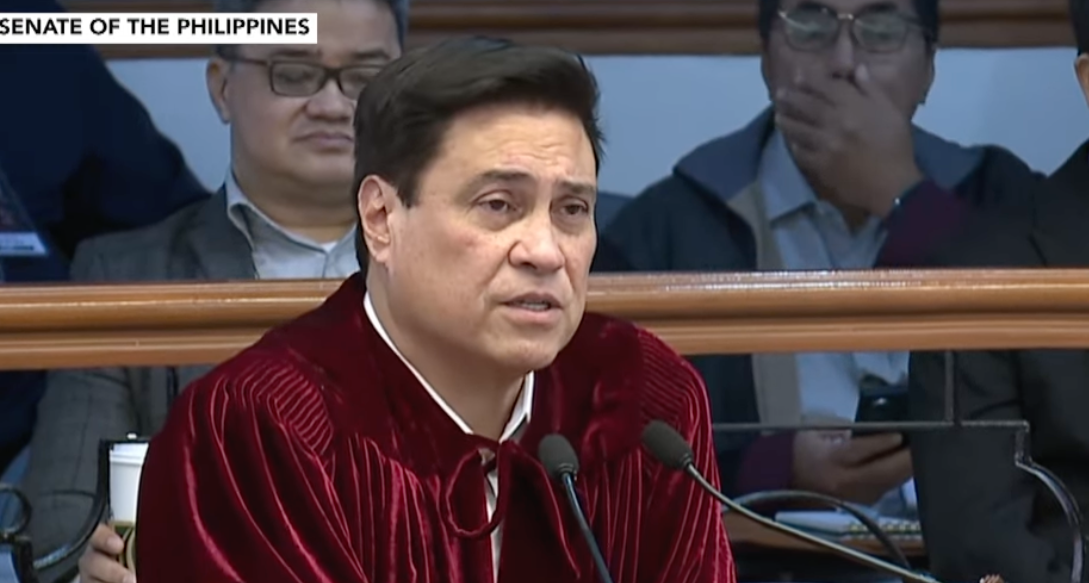
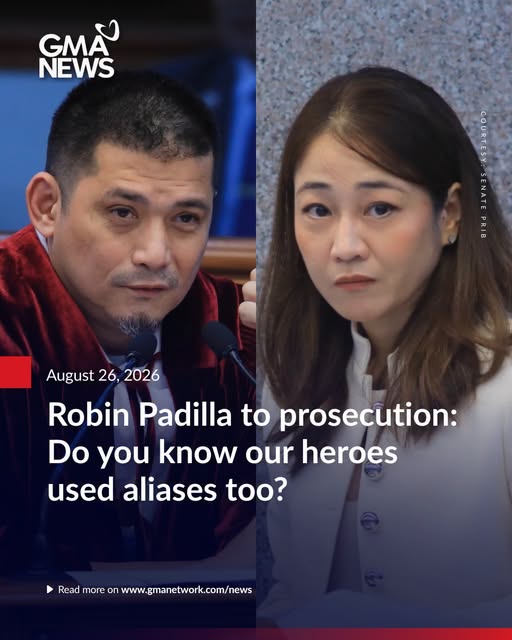
My friends and countrymen, on the nineteenth day of Vice President Sara Duterte's impeachment trial (about which I have written separately in The Case for the Conviction of Vice President Sara Duterte), Senator-Judge Robin Padilla attempted something bold: to place the names on the Office of the Vice President's confidential fund acknowledgment receipts, names like Mary Grace Piattos, Antonio Pagong, Timon Andrew Pusa, Don Piang, and Shane Ngitngit, in the company of the most revered aliases in Philippine history. He invoked the Katipunan. He recited a long list of revolutionary pseudonyms: Dimasalang, Siling Labuyo, Tikbalang, Magdalo, Lakambini, and others. He asked the prosecution counsel, Mae Divinagracia, whether she knew the name Marcial Bonifacio. She did not. Padilla answered his own question: Marcial Bonifacio was the alias Benigno "Ninoy" Aquino Jr. used on the passport that carried him home from exile in Boston in 1983, a name reportedly derived from martial law and Fort Bonifacio, where Aquino had been imprisoned for nearly eight years.
Let that be recorded accurately before any argument follows. Padilla's historical facts were not wrong. The Katipuneros did use aliases. Ninoy Aquino did travel under the name Marcial Bonifacio. These are documented, verifiable facts, and no honest commentator would dispute them. What Padilla did with those facts, however, is a different matter entirely. It is a textbook case of what logicians call false equivalence: placing two things side by side that share a surface resemblance, in this case, the use of aliases, while ignoring the fundamental difference in purpose, context, and consequence that makes the comparison collapse under any serious weight. That comparison deserves examination rather than applause.
Consider what the Katipuneros were doing when they adopted their aliases. They were concealing their identities from a colonial government that would have imprisoned or executed them for the act of organizing a revolution. Their pseudonyms protected their lives and the lives of their families. Ninoy Aquino adopted the name Marcial Bonifacio for the same essential reason: he was returning to a country governed by a dictator who had already imprisoned him for nearly eight years, and he needed to pass through an airport controlled by that dictator's military. In both cases, the alias shielded a person from the power of the state. In both cases, the person behind the alias was real, identifiable, and acting at personal risk.
Now consider what the names on the OVP's acknowledgment receipts were doing. They were not shielding anyone from a colonial government. They were not protecting a dissident returning to face a dictator. They were appearing on official documents submitted to the Commission on Audit to certify that the Office of the Vice President had disbursed public money, drawn from the taxes of Filipino workers, to named recipients for legitimate confidential activities. The question was never whether aliases can exist. The question was whether real people stood behind these particular names and actually received the funds those names were used to account for.
The Philippine Statistics Authority answered that question on Day 22 of the trial. Assistant National Statistician Marizza Grande testified that of 2,669 names listed as confidential fund recipients across the OVP and the Department of Education, 1,685 had no birth, marriage, or death records in the PSA's civil registry database. Thirty-seven names matched records of people already dead, including one, Marlene Sunga, who died in 1965 at two months of age and appeared as a fund recipient sixty years later. Twenty-five listed payees were minors, including two children who were only one year old when they supposedly received ₱400,000 each. Mary Grace Piattos, the most publicized name of all, had no record of any kind. "Wala po," Grande told the court.
Senator-Judge Bam Aquino, Ninoy's own nephew, delivered the rebuttal Padilla's argument deserved, and he did so with a precision that managed to be both legally serious and quietly devastating. Yes, he said, his uncle did use the alias Marcial Bonifacio to come home from Boston. However, Ninoy never handled confidential funds. Ninoy never received confidential funds. The name Marcial Bonifacio never appeared on any acknowledgment receipt. Moreover, one does not defend the appearance of a dead infant's name on a government disbursement document by invoking the courage of revolutionaries who risked their lives for independence.
Prosecution counsel Mae Divinagracia addressed the legal dimension directly. Commonwealth Act No. 142, the Anti-Alias Law, does not prohibit the use of assumed names outright, but it does require that a person disclose a true identity alongside any alias used. Her position rested on that specific obligation: no one had disclosed the true identities behind these receipt names to auditors, and no evidence established that the names corresponded to real people who actually received public money.
On Day 22, the defense itself confirmed what the prosecution had been arguing. Defense counsel Justin Gular, responding to a direct question from Senator-Judge Risa Hontiveros, acknowledged for the first time on the record that the names on the acknowledgment receipts are, in fact, aliases. Hontiveros had pressed the point because the defense appeared to be arguing two contradictory positions at once: that the names might be real people missed by PSA records, and that they were aliases all along. Gular chose the latter and, in so doing, he conceded the very premise that Padilla's Katipunan analogy was designed to make unnecessary: that the names require explanation.
Senator-Judge Raffy Tulfo, himself no critic of the Duterte family, added a detail that Padilla's analogy could not absorb. Examining the acknowledgment receipts, Tulfo observed that the signatures across multiple payees appeared to come from the same hand, calling the similar handwriting "very questionable." He said the aliases themselves might be forgivable, but identical signatures were not. The Katipuneros may have used borrowed names, but they did not (so far as history records) all sign their receipts with the same pen in the same hand.
Even I, your humble advocate, write this commentary under my own pen name, Marcial Bonifacio, a name I chose deliberately for the historical and symbolic resonance it carries. My readers know the name; my arguments are published under it; my accountability travels with it. A pen name used to protect a writer's identity (for fear of persecution) while publishing documented, verifiable arguments and patriotic literature is one thing. A name resembling a popular snack brand, attached to a government receipt certifying that public funds were received by a person who, according to the government's own population records, does not exist, is another thing altogether. Senator Padilla's error was not in knowing Philippine history. It was in believing that Philippine history could be made to excuse a practice that history's own heroes would have found unrecognizable and even detestable.
The Katipuneros used aliases to protect their lives while fighting for a nation. The question before this court is whether aliases were used to protect the disbursement of that nation's money from the scrutiny it was owed. Those are not the same act, nor are they comparable acts. On the contrary, one risked everything for the country, while the other (if the prosecution's evidence holds) risked the country's money for reasons no one has yet been able to explain.
My friends and countrymen, our heroes earned the right to hide their names. No one earns the right to hide behind a dead infant's name on a government receipt.
Long live the memory of those who risked their lives under borrowed names, and long live the Republic they fought to build!
Stay informed!
Join a community of engaged patriots passionate about liberty, good governance, and strengthening U.S.-Philippine relations. By subscribing to Marcial's Law, you’ll receive exclusive insights and updates on policies that shape the future of both nations. Be part of the conversation that challenges the status quo and advocates for a return to constitutional principles. Subscribe now and never miss a critical update!