I seek to empower people by giving them something to ponder.
By Marcial Bonifacio
10/2/26
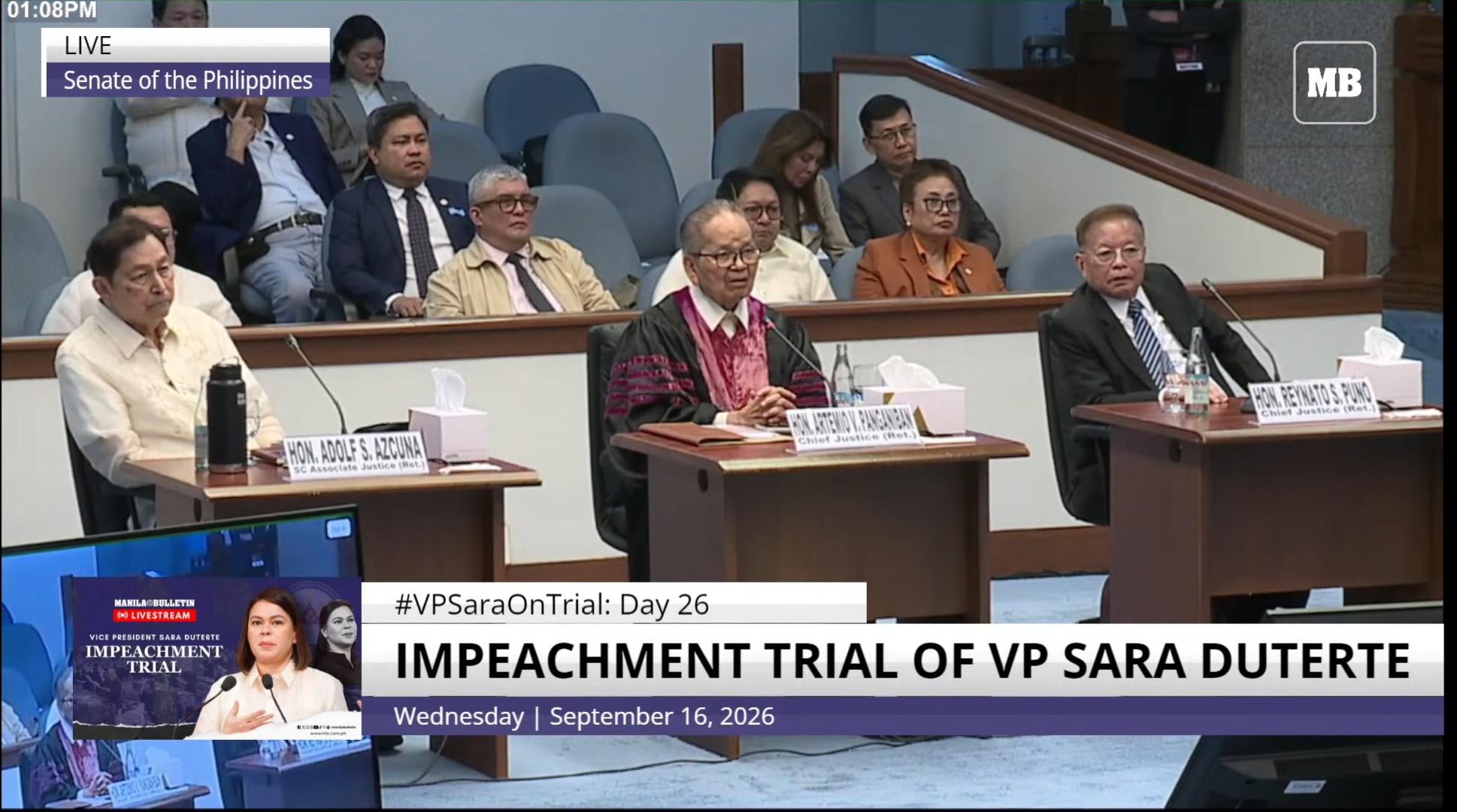
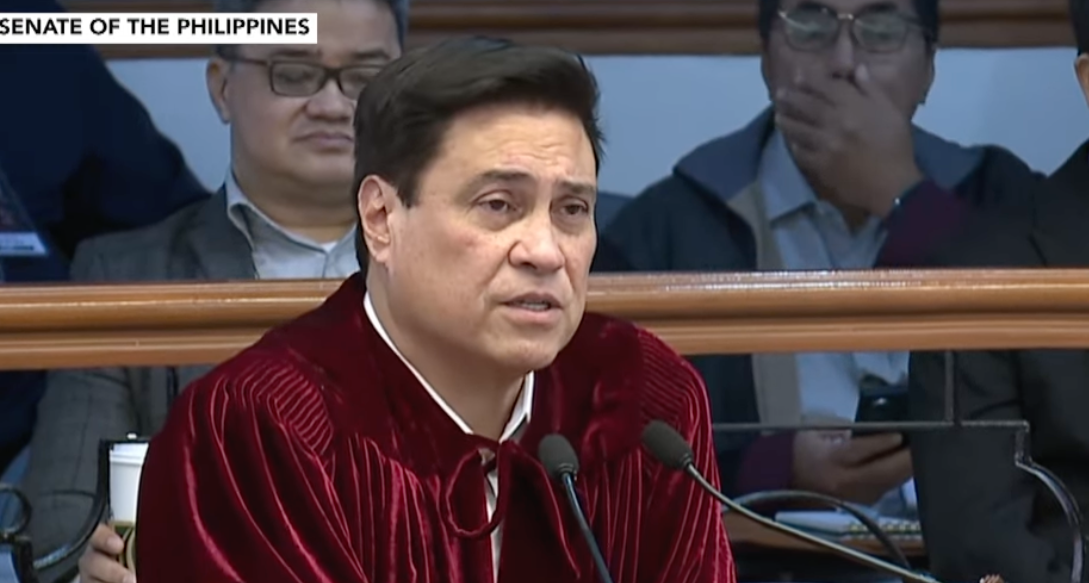
My friends and countrymen, on the 30th day of the impeachment trial of Vice President Sara Duterte last Monday, Police Major Joericson Sangalang of the Philippine National Police Firearms and Explosives Office testified that 51 firearms were registered to Duterte and her husband, lawyer Manases Carpio. Several senator-judges questioned the relevance of this testimony. Senator Juan Miguel Zubiri, who described himself as a "pro-gun" legislator, emphasized that owning firearms in the Philippines is a privilege, not a constitutional right, unlike the right to bear arms under the United States Constitution. Zubiri's distinction between the Philippine privilege and the American constitutional right was more significant than it may have appeared in the moment, because it identified a constitutional difference that every Filipino citizen should understand. The framework that protects American gun owners simply does not exist in the Philippines. It has never existed. The history of Philippine law confirms this without ambiguity, and the Philippine Supreme Court has settled the question definitively.
In my commentary, "The Case for the Conviction of Vice President Sara Duterte," I examined the broader constitutional grounds for her conviction. The constitutional framework behind the firearms testimony, however, deserves its own examination.
The Deliberate Omission of 1902
When the United States Congress enacted the Philippine Bill of 1902 to serve as the organic law of the Insular Government of the Philippine Islands, it transplanted many provisions from the American Bill of Rights. It incorporated protections for speech, due process, and the free exercise of religion. It did not, however, include the Second Amendment. The omission was deliberate, not accidental.
The context was the Philippine-American War of 1899 to 1902 and its aftermath. The United States was governing a territory where armed resistance remained active, where private armies were common among provincial elites, and where the colonial administration's primary security concern was pacification and the establishment of civil order. Granting a constitutional right to bear arms to a population the United States had just fought a war to subdue would have been directly contrary to American colonial security interests. The colonial government needed to control the flow and possession of firearms, not constitutionally protect it. No congressional committee report from the 1902 deliberations has been identified that states the exclusion of the Second Amendment in explicit terms. The historical circumstances, however, leave little room for an alternative explanation. A colonial government engaged in active pacification of armed resistance does not constitutionally guarantee the right to bear arms to the population it is pacifying.
An Omission That Carried Through Every Constitution
The exclusion established in 1902 was never reversed. The 1935 Commonwealth Constitution, drafted under American supervision and ratified by the Filipino people, did not include a right to bear arms. The 1973 Constitution, enacted during the Marcos era, did not include it. The 1987 Constitution, drafted in the aftermath of the People Power Revolution and ratified as the supreme law of the restored republic, did not include it either. Across four constitutions spanning more than a century, no Philippine constitutional convention and no Philippine legislature has ever elevated firearms ownership from a regulated privilege to a constitutional right.
The Supreme Court Has Settled the Question
The Philippine Supreme Court has confirmed this history in its jurisprudence. In the landmark case of Chavez v. Romulo (G.R. No. 157036, 2004), the Court stated: "Our Constitution contains no provision similar to the Second Amendment, as we aptly observed in the early case of United States vs. Pomeroy." In Acosta v. Ochoa (G.R. No. 211559), the Court ruled with equal clarity: "The history of our laws reveals that we Filipinos have never had such constitutional right. None of our Constitutions ever provided the right to bear arms." The Court further stated that "the right to bear arms is a mere statutory privilege, not a constitutional right."
Because the right is statutory rather than constitutional, the State may regulate gun ownership freely through its police power without facing constitutional challenge. The current governing statute is Republic Act No. 10591, the Comprehensive Firearms and Ammunition Regulation Act of 2013, which requires all firearms to be registered with the PNP Firearms and Explosives Office and imposes licensing requirements on every citizen who seeks to own one. This is a fundamental distinction that separates the Philippine legal framework from the American one.
The Practical Consequence for the Impeachment Trial
The distinction between a constitutional right and a statutory privilege is not academic. It has a direct consequence in the impeachment trial now before the Philippine Senate. Because firearms ownership in the Philippines is a privilege regulated entirely by statute, the government can require public officials to disclose every registered firearm in their Statement of Assets, Liabilities, and Net Worth without any constitutional obstacle. The SALN obligation itself is grounded in two statutes: Section 7 of Republic Act No. 3019, the Anti-Graft and Corrupt Practices Act, which instructs public officers to file a true and detailed SALN, and Section 8 of Republic Act No. 6713, the Code of Conduct and Ethical Standards for Public Officials and Employees, which requires disclosure of personal property and acquisition cost, including "all other assets such as investments, cash on hand or in banks, stocks, bonds, and the like." In the United States, a comparable disclosure requirement would enter contested constitutional territory, because the Second Amendment has been interpreted by the U.S. Supreme Court as protecting an individual right to keep and bear arms, and any regulation touching that right is subject to judicial scrutiny. The Philippine legal framework presents no such barrier.
This is precisely why the prosecution could present the testimony of Police Major Joericson Sangalang regarding the 51 firearms registered to Vice President Duterte and her husband as evidence of SALN non-compliance. Sangalang testified that 22 firearms were registered to Duterte and 29 to Carpio, with a combined market value of more than P7.2 million. House prosecutor Representative Terry Ridon stated that the firearms were not listed in the Vice President's SALN from 2007 to 2025, and that "on top of not declaring cash in bank and cash on hand in her SALN from 2019 to 2025, the Vice President also failed to declare these firearms." Private prosecutor Lorna Kapunan framed the testimony as evidence of a broader pattern: "Even though they say it is only P7 million, when you submit your SALN, you are certifying under oath that it is all that you own."
The Senate received this testimony with significant skepticism. Senator Raffy Tulfo called the testimony "a waste of time." Presiding officer Francis Escudero noted that the P7.2 million in firearms would be "well within the SALN submitted of P88 million as of the latest," expressed doubts on the testimony's relevance, and pointed out that there is "no requirement for a firearm to be declared separately in the SALN." Senator Tito Sotto, who noted that he owns firearms and declares them in his SALN under "personal properties," echoed the same concern.
The legal dispute centers on whether existing SALN rules required individual firearms declaration at all. Prosecutor Bel Zamora cited Section 34 of the 2025 Omnibus Rules on the SALN, which requires the individual declaration of registered personal property, including motor vehicles, aircraft, and firearms. Defense counsel Carlo Narvasa, however, argued that the provision applies only to 2026 SALNs onwards and cannot be applied retroactively. CSC Resolution No. 1300173, issued in 2013, did not explicitly state that firearms should be specifically declared in one's SALN. House lead prosecutor Gerville Luistro acknowledged this gap but pressed the point: "If it was not particularly declared as firearms, which item did they declare these personal properties in their SALN?"
Whether or not the testimony carries the evidentiary weight the prosecution intends, the constitutional framework that permitted its presentation remains unchanged. That framework is precisely what made the prosecution's case legally possible in the Philippines, where an American prosecution on identical grounds would be far more complicated.
The Constitutional Question Before the Senate
My friends and countrymen, when we understand this constitutional history, the Duterte impeachment proceedings become clearer. We are not witnessing an overreach of government power. We are witnessing the application of a legal framework that has been in place since 1902, one that the Philippine people have reaffirmed through four constitutions and that the highest court of the land has upheld without reservation.
Remember, my friends and countrymen, the framers of every Philippine constitution chose not to include a right to bear arms. That choice has consequences, and those consequences are now being tested in the impeachment court. The prosecution has presented documented evidence of 51 firearms registered to the Vice President and her husband. The defense has argued that existing SALN rules did not require their individual declaration. The senator-judges have expressed skepticism about the testimony's weight. These are questions of evidence and statutory interpretation that the Senate must resolve. The constitutional question, however, is settled. The government of the Philippines possesses the legal authority to require full disclosure of firearms from its public officials, and every Filipino citizen has the right and the obligation to understand why.
Long live the rule of law, and long live the Republic of the Philippines!
Stay informed!
Join a community of engaged patriots passionate about liberty, good governance, and strengthening U.S.-Philippine relations. By subscribing to Marcial's Law, you’ll receive exclusive insights and updates on policies that shape the future of both nations. Be part of the conversation that challenges the status quo and advocates for a return to constitutional principles. Subscribe now and never miss a critical update!