I seek to empower people by giving them something to ponder.
By Marcial Bonifacio
9/13/26
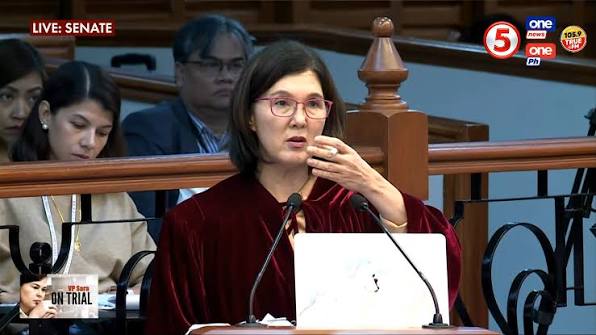
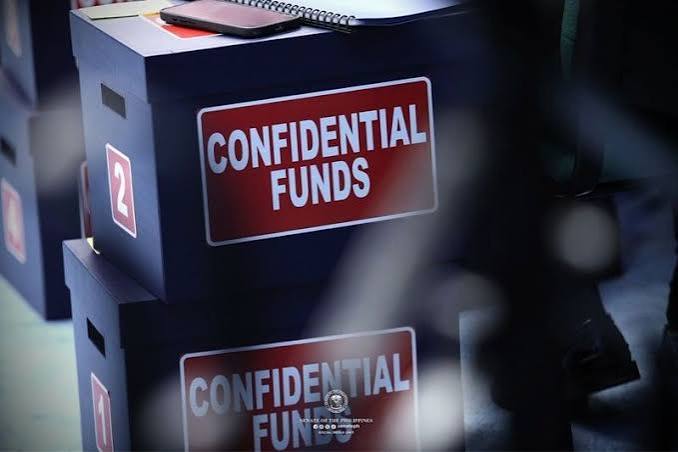
My friends and countrymen, this is an explainer to Vice President Sara Duterte's impeachment trial, which I have written about in The Case for the Conviction of Vice President Sara Duterte. The trial has placed a term at the center of national conversation that most citizens have heard but few have been asked to understand precisely: confidential funds. Before any Filipino judges whether ₱612.5 million in such funds was spent properly or improperly, every Filipino deserves a precise understanding of what those funds are and why the rules governing them exist.
What Confidential Funds Are
Confidential funds are lump-sum budget allocations given to civilian government agencies for a single, narrow purpose: surveillance and confidential information-gathering activities that support an agency's official mandate. They are authorized through the General Appropriations Act, the annual law that funds the entire national government, and governed by Joint Circular No. 2015-01, issued jointly by the Commission on Audit, the Department of Budget and Management, the Department of the Interior and Local Government, the Department of National Defense, and the Governance Commission for Government-Owned and Controlled Corporations.
These are not slush funds. They are not petty cash. They are not discretionary spending that an agency head may direct toward any purpose she sees fit. They exist for one category of activity, surveillance and information gathering, and for no other.
How Confidential Funds Differ From Intelligence Funds
This distinction matters more than most citizens realize, because the two terms are often used interchangeably in public conversation, even though they describe legally separate categories of spending with different rules.
Confidential funds are for civilian agencies. They cover surveillance-related expenses that support an agency's own operations, such as a mayor's office quietly monitoring narcotics activity in a municipality. Such an operation requires discretion but is not military work.
Intelligence funds are for uniformed and military personnel and designated intelligence practitioners from agencies such as the Armed Forces of the Philippines, the Philippine National Police, the Philippine Navy, and the Philippine Air Force. These cover information-gathering activities with a direct impact on national security, and their release requires prior approval from the President of the Philippines, a requirement confidential funds do not carry.
The dividing line is the nature of the work and the personnel performing it. Civilian surveillance in support of an agency's mandate falls under confidential funds. National security intelligence work performed by military or law-enforcement professionals falls under intelligence funds. The two are not interchangeable, and the law does not treat them as such.
How Confidential Funds Differ From Ordinary Government Spending
Here is where the distinction becomes most important for any citizen who pays taxes and expects them to be accounted for. Ordinary government spending, whether for school buildings, road repairs, or employee salaries, follows a standard trail of documentation: purchase orders, receipts, invoices, delivery confirmations, and itemized reports submitted to the Commission on Audit for regular review. A citizen, a journalist, or a legislator can, in principle, trace a peso from the treasury to the project it paid for.
Confidential funds operate under a fundamentally different accountability structure. Because the activities they finance are, by definition, meant to remain undisclosed, the standard receipt-and-invoice trail does not apply. Instead, disbursements are certified through accomplishment reports and sealed documentary evidence, submitted in sealed envelopes to a specialized COA unit called the Intelligence and Confidential Fund Audit Unit, which operates directly under the Office of the COA Chairperson. The COA itself has acknowledged that auditing these funds is inherently difficult, since the commission is largely dependent on trusting whatever the disbursing agency submits.
This is where the system's vulnerability lies. The reduced transparency is not a defect in the rules; it is a feature, designed to protect the operational security of legitimate surveillance work. It becomes a defect only when an agency treats the reduced documentation requirements as an invitation to spend without genuine accountability, which is precisely the allegation at the center of the current impeachment trial.
Who Handles the Money, and Who Is Liable
Confidential funds are entrusted to a Special Disbursing Officer, a regular government employee designated by the agency head. The SDO manages the funds, maintains the sealed documentation, and submits liquidation and accomplishment reports to the COA. Under the governing rules, both the SDO and the agency head can be held jointly and severally liable for failure to render proper accounts or for misuse of the funds, with penalties that include perpetual disqualification from public office.
This is not a minor administrative consequence. It means that when the Commission on Audit flags an irregularity in how confidential funds were disbursed, the person who signed off on the disbursement and the person who ordered it both face personal legal exposure, not merely institutional embarrassment.
The current trial has already put these roles to the test. Former OVP Special Disbursing Officer Gina Acosta testified that she disbursed the full ₱500 million in OVP confidential funds directly to Colonel Raymund Dante Lachica, head of the Vice Presidential Security and Protection Group, on Duterte's own orders. At DepEd, Special Disbursing Officer Edward Fajarda testified before the House that he handed confidential fund cash to Colonel Dennis Nolasco for distribution. In both agencies, the person who physically handled the money and the person who authorized its release are now exposed to the same legal consequences the governing rules were built to impose.
Why the DepEd and OVP Allocations Raised Questions
Not every government agency receives confidential funds, and not every agency that requests them has an obvious operational reason for doing so. The Department of National Defense, the Philippine National Police, and the Office of the President have clear mandates that align with surveillance and intelligence work. The Department of Education and the Office of the Vice President do not. This is not a political observation. It is a structural one: neither office has a law-enforcement, military, or intelligence mandate that would ordinarily justify confidential expenditures.
Duterte's defense has argued otherwise, contending that both offices conducted intelligence-adjacent activities, including anti-drug monitoring and campus safety work, that fell within the rules governing confidential fund use. Whether those activities actually occurred, and whether they account for the scale of spending now in question, is precisely what the trial's evidentiary phase is testing. The structural observation stands regardless: neither office's core mandate resembles that of the agencies for which confidential funds were originally designed.
When the Commission on Audit flagged ₱125 million of the OVP's confidential funds (Notice of Disallowance No. 2024-002-100, dated August 8, 2024) for having been disbursed in full within eleven days, it was testing exactly this question: whether spending of that speed and scale, from an office with no surveillance mandate, could be justified under the rules that govern these funds. That question remains at the center of Article I of the impeachment case.
Testimony from the trial's twentieth and twenty-first days sharpened this question considerably. Two Army colonels, Manaros Boransing II and Magtanggol Panopio, testified that their units never received confidential funds from DepEd for the Youth Leadership Summits their certifications had been used to justify, and that those certifications were never intended to validate confidential fund spending. The following day, former DepEd chief of staff Michael Poa, testifying as a hostile witness and himself a member of Duterte's defense team, confirmed under oath that not a single peso of DepEd's confidential funds went to the AFP for those summits. If the certifications submitted to the COA did not reflect actual confidential-fund expenditures, the question becomes what the funds were actually spent on, and whether the sealed documentation submitted to auditors accurately describes activities that took place.
The American Parallel: The Black Budget and the Church Committee
American readers, and Filipino readers familiar with the American system, will recognize a close parallel. The United States has its own version of confidential and intelligence funds, known informally as the "black budget." These are classified appropriations routed primarily through the Central Intelligence Agency, the National Security Agency, and the Department of Defense. Section 6 of the CIA Act of 1949 (50 U.S.C. § 3510) permits the agency to spend funds without adhering to standard federal fiscal reporting requirements, a structure that mirrors, in principle, the reduced-transparency framework governing Philippine confidential funds.
The parallel does not end with the structure. It extends to the abuse and the reform. In 1975, Senator Frank Church of Idaho led a sixteen-month Senate investigation into decades of secret spending by the CIA, FBI, and NSA. The Church Committee reviewed 110,000 documents, interviewed over 800 witnesses, and uncovered abuses that had been shielded from both Congress and the public for years, including assassination plots against foreign leaders, illegal domestic surveillance of American citizens, and covert operations conducted without meaningful oversight.
The reforms that followed created permanent intelligence oversight committees in both the Senate and the House, established a special court to review surveillance warrants, and required the Director of National Intelligence to publicly disclose the aggregate intelligence budget each year. The lesson for Filipino citizens is not that America solved the problem. It is that America recognized, through painful experience, that secret funds without meaningful oversight will eventually be misused, because the structure itself creates the opportunity, and opportunity without accountability is an invitation that someone, eventually, will accept.
Why This Matters to Every Taxpayer
A Filipino who has never handled a confidential fund and never will still pays for them. These allocations come from the General Appropriations Act, which means they come from the national budget, which means they come from the taxes paid by every worker, vendor, and business owner in the country. When confidential funds are spent on legitimate surveillance that protects public safety, they earn their secrecy. When they are spent on activities that have no connection to surveillance or intelligence gathering, or when they are disbursed so rapidly that no meaningful accounting is possible, the secrecy that was meant to protect the operation instead protects the person who spent the money.
That is the distinction every citizen should carry into any conversation about this trial. Confidential funds are not inherently corrupt. They are inherently vulnerable, because the very feature that makes them operationally useful, their exemption from standard transparency, is the same feature that makes them dangerous when the person holding them treats accountability as optional.
The Philippines already has two institutions designed to prevent exactly this kind of abuse: the COA's Intelligence and Confidential Fund Audit Unit, which reviews sealed documentation submitted by disbursing agencies, and the Joint Congressional Oversight Committee on Intelligence and Confidential Funds, Programmes and Activities, which exercises legislative supervision over how these allocations are spent. Whether those mechanisms are sufficient to prevent the kind of abuse now alleged is a question the trial itself is helping to answer. Citizens who wish to monitor the oversight committee's work can begin by following its published hearing schedules and the official records of the Senate and the House of Representatives.
Understanding what confidential funds are is not a luxury reserved for auditors and legislators. It is a civic necessity for anyone whose taxes pay for them. The funds belong to the public. The secrecy that shields them is borrowed, not owned, by the officials entrusted with their use. When that trust is broken, it is not the auditor's loss. It is yours.
My friends and countrymen, follow this trial. Read the COA's findings. Demand transparency from the officials who spend your money in your name. After all, the republic endures only when its citizens refuse to look away.
Long live transparency in public service, and long live the Republic of the Philippines!
Stay informed!
Join a community of engaged patriots passionate about liberty, good governance, and strengthening U.S.-Philippine relations. By subscribing to Marcial's Law, you’ll receive exclusive insights and updates on policies that shape the future of both nations. Be part of the conversation that challenges the status quo and advocates for a return to constitutional principles. Subscribe now and never miss a critical update!