I seek to empower people by giving them something to ponder.
By Marcial Bonifacio
8/14/26
Updated:
9/2/26
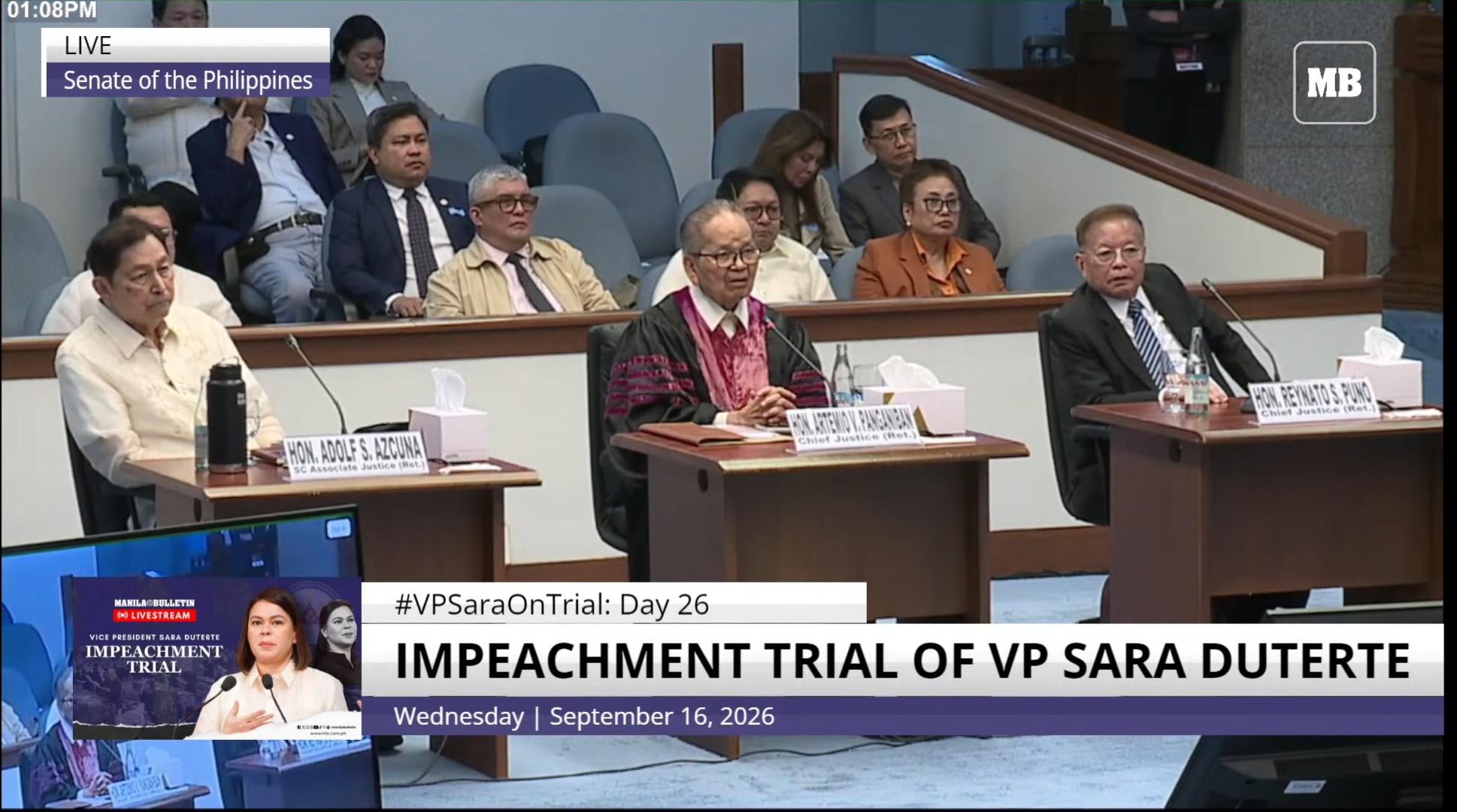
My friends and countrymen, this is an explainer to Vice President Sara Duterte's impeachment trial, which I have written about in The Case for the Conviction of Vice President Sara Duterte. On the fifteenth day of the impeachment trial, a single Facebook post from a lawyer, one with no seat on the bench and no witness stand to answer from, threatened, for a moment, to become the day's biggest story. House private prosecutor Amando Virgil Ligutan posted a general statement about courtroom procedure. The defense called it a violation of Rule 18. Days later, the presiding officer delivered a ruling that reshaped how every lawyer, senator, and the Vice President herself must now conduct themselves outside the chamber. Before any citizen judges whether a Facebook post can derail a trial of this magnitude, the rule itself deserves a plain explanation.
What Rule 18 Actually Says
Rule 18 of the Senate's impeachment rules prohibits senators, House prosecutors, defense counsels, private counsels, and witnesses from making public comments or disclosures about the merits of a pending impeachment trial. In plainer terms, everyone with a formal role in the trial is barred from arguing their case anywhere except inside the Senate chamber itself. This is a version of what Philippine law more broadly calls the sub judice rule, a principle that prohibits public commentary on matters still awaiting a court's judgment, precisely so that public opinion, media pressure, or courtroom theater performed outside the courtroom cannot substitute for the evidence and arguments a tribunal is supposed to weigh on its own.
This is a concern the American founders themselves anticipated, long before Facebook existed to test it. Alexander Hamilton, writing in Federalist No. 65 in 1788 to defend the Constitution's design for trying impeachments, warned that such trials would rarely be decided on evidence alone, since the charges almost always touch matters that divide the public into rival camps before a single witness testifies. Hamilton's fear was that the accused's fate would turn on the comparative strength of the two parties rather than a fair demonstration of guilt or innocence, with the community choosing sides long before the tribunal rendered its verdict. Rule 18 answers a version of the same fear Hamilton raised two centuries earlier: that a trial conducted partly in public argument, rather than wholly within the chamber built to weigh it, ceases to be a trial in any meaningful sense at all.
The purpose is straightforward. A trial's integrity depends on the judges deciding the case based on what happens inside the proceeding, not on what lawyers post to their followers while the gavel is still in session. Impeachment court spokesperson Regie Tongol, addressing a separate Rule 18 controversy earlier in this same trial, put the principle plainly: senator-judges "are even more covered" by the rule than the lawyers arguing before them, since impeachment is inherently a political process, and any appearance that a judge has already formed an opinion risks damaging public confidence in the verdict itself.
What Actually Happened on Day 15
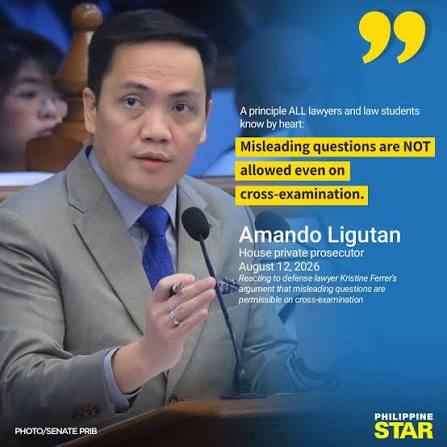
The controversy began during a heated cross-examination exchange between private prosecutor Lorna Kapunan and defense counsel Kristine Ferrer, in which Ferrer appeared to argue that misleading questions were permissible during cross-examination. At 11:29 that morning, Ligutan posted to Facebook a reminder that "misleading questions are not allowed even in cross-examination."
Lead defense counsel Sheila Sison raised the issue in a formal manifestation before the court, arguing the post mischaracterized Ferrer's courtroom position, disrespected a fellow member of the bar, and violated Rule 18's ban on public commentary about the case's merits. Ligutan defended himself to reporters afterward, saying his post named no one and referenced no case, and that he was confident he knew exactly where the line was and had not crossed it.
Presiding Officer Francis Escudero did not rule from the bench that day. He told the floor he had directed the clerk of court to monitor counsels' public statements throughout the week, and observed that one side had been "crossing the line many, many times." He promised a formal ruling, and delivered it several trial days later, on Day 19.
This Was Not the First Time
Weeks earlier, in June, Senator Robin Padilla, one of the senator-judges hearing the case, posted on Facebook defending his own courtroom questions about the authenticity of video evidence presented at trial. Tongol, the court spokesperson, confirmed that senator-judges are bound by Rule 18 as well, and warned that public statements suggesting bias could undermine confidence in the court's eventual decision. The Ligutan controversy is therefore not an isolated incident but the second public test of the same rule within a single trial, a pattern worth watching as the proceedings continue.
The Ruling, When It Came
Escudero's ruling arrived on Day 19, August 26, and came in three parts. First, rather than punish anyone for what had already been said, he wiped the record clean of every prior sub judice comment, Ligutan's post included, but made clear the reset would not repeat: "From this point forward, however, Rule 18 shall be strictly enforced and be given full force and effect." Second, he set a two-strike structure going forward: a first violation earns a public reprimand and admonition in open court, while a second or later violation carries a fine of up to ₱30,000 and, for lawyers, the possibility of the incident being referred to the Integrated Bar of the Philippines and the Supreme Court for professional discipline. Third, he ruled that alleged violations by senator-judges themselves would not be policed by the impeachment court directly, but referred instead to the Senate Committee on Ethics and Privileges, so that disciplining a fellow judge would not distract the trial from its actual purpose.
Escudero grounded the ruling in two goals: protecting the public's right to information about the trial while preventing the public from prejudging its outcome, and shielding the proceedings from what court spokesperson Reginald Tongol later called "extrajudicial trial by publicity." Before turning to the lawyers, Escudero first reminded the senator-judges of their own oath to do impartial justice, a sequencing that placed the court's obligation to itself ahead of the obligation it was imposing on everyone else.
As for Ligutan specifically, Escudero's response to his self-defense, that he had been acting instinctively as a law teacher, was direct: a lawyer may keep teaching outside the proceedings, but must set that role aside while participating in the trial itself. Because his post fell under the clean-slate reset, no sanction followed. He is, however, now subject to the same two-strike framework as everyone else should it happen again.
In a detail that underscored exactly what the rule was built to prevent, lead prosecutor Gerville Luistro told the court that Duterte herself had posted a public statement about the trial at the very moment Escudero was reading his ruling aloud. Escudero's answer was that the new rule was already in force by then regardless: "prospectivity will still apply." He declined to let the statement's contents be read into the record, since doing so would itself mean discussing the case's merits in open court, and directed her own counsel to remind her of the rule going forward.
Two Honest Perspectives
Those who see merit in the defense's complaint argue that the timing and content of Ligutan's post make its target obvious even without naming names. A statement about misleading cross-examination questions, posted minutes after a public exchange in which the defense had just argued the opposite position, functions as public commentary on the case regardless of whether a name appears in the text. Under this reading, Rule 18 exists precisely to prevent lawyers from litigating their case in the court of public opinion between recesses, and a technical absence of names does not cure that.
Those unpersuaded by the complaint counter that Rule 18, as written, prohibits comment on the merits of the case, meaning the underlying facts, the guilt or innocence of the Vice President, the strength of the evidence, not general statements of settled legal principle. Representative Terry Ridon made this argument directly, asking whether the post named a person or discussed the case's merits and concluding it did neither. Under this reading, a lawyer restating a rule every law student learns in evidence class is teaching, not litigating, and treating every adjacent public statement as a Rule 18 violation would leave lawyers unable to discuss the law at all while a trial is ongoing.
Both readings rest on a genuine ambiguity in the rule itself: whether "the merits" means only direct commentary on guilt or innocence, or extends to any public statement whose obvious context relates to a specific courtroom dispute. Escudero's eventual ruling did not resolve that ambiguity so much as sidestep it, choosing to forgive the past uncertainty entirely rather than adjudicate whether Ligutan's specific post had crossed the line. What his ruling did resolve was the standard going forward: strict, two-strike enforcement, with no more room for the kind of good-faith argument Ligutan and Ridon had made.
Why This Matters Beyond the Courtroom
A citizen with no interest in impeachment law might reasonably ask why a lawyer's Facebook post deserves this much attention. The answer lies in a broader principle that touches every Filipino who has ever followed a court case in the news, or discussed one with a neighbor. Sub judice rules exist because trials are supposed to be decided by evidence presented and tested inside a courtroom, not by whichever side manages to dominate public conversation while the case is pending. The same principle that restrains Ligutan restrains a barangay official commenting publicly on a pending case against a political rival, or a company executive posting about ongoing litigation involving a competitor, or, for that matter, any citizen serving on a jury who might be tempted to discuss the case with family before a verdict is reached.
The Philippine Supreme Court took this principle seriously enough to formally rule, in a matter involving former Chief Justice Maria Lourdes Sereno, that a public official's campaign of public statements about her own pending case violated the same sub judice standard now at issue in Ligutan's post, showing that this is not a minor procedural nicety invented for this trial but an established doctrine with real consequences reaching all the way to the nation's highest court.
My friends and countrymen, whether one Facebook post crossed a legal line is, in the end, a narrower question than the principle it tests. The principle is this: that citizens are entitled to a verdict reached through evidence weighed in the open chamber, not through whichever lawyer's post gained the most shares before the next recess.
Long live the rule of law, and long live the Republic of the Philippines!
Stay informed!
Join a community of engaged patriots passionate about liberty, good governance, and strengthening U.S.-Philippine relations. By subscribing to Marcial's Law, you’ll receive exclusive insights and updates on policies that shape the future of both nations. Be part of the conversation that challenges the status quo and advocates for a return to constitutional principles. Subscribe now and never miss a critical update!