I seek to empower people by giving them something to ponder.
By Marcial Bonifacio
9/23/26
My friends and countrymen, when United States President Donald Trump announced a 19 percent tariff on Philippine goods entering America on July 22, 2025, the reaction in much of the Philippine press was predictable: alarm and the swift conclusion that America had extracted a lopsided bargain from a smaller ally with no leverage to refuse it. The Philippine Daily Inquirer cited Nomura Global Markets Research estimating the tariff would shave 0.4 percentage point off Philippine GDP growth. Rappler noted that the one-point reduction from 20 to 19 percent "meant little to experts." That reaction is understandable. It is also, on the evidence, substantially wrong; the evidence deserves a hearing before the verdict is delivered. That evidence includes the fact that the Philippine tariff rate has already fallen from a threatened 20 percent to 12.5 percent, with a legislative pathway to 10, and that Philippine exporters now face a concrete 2.5-percentage-point disadvantage against Indonesian and Malaysian competitors that domestic action by the Philippine Congress can close.
What the Headline Does Not Tell You
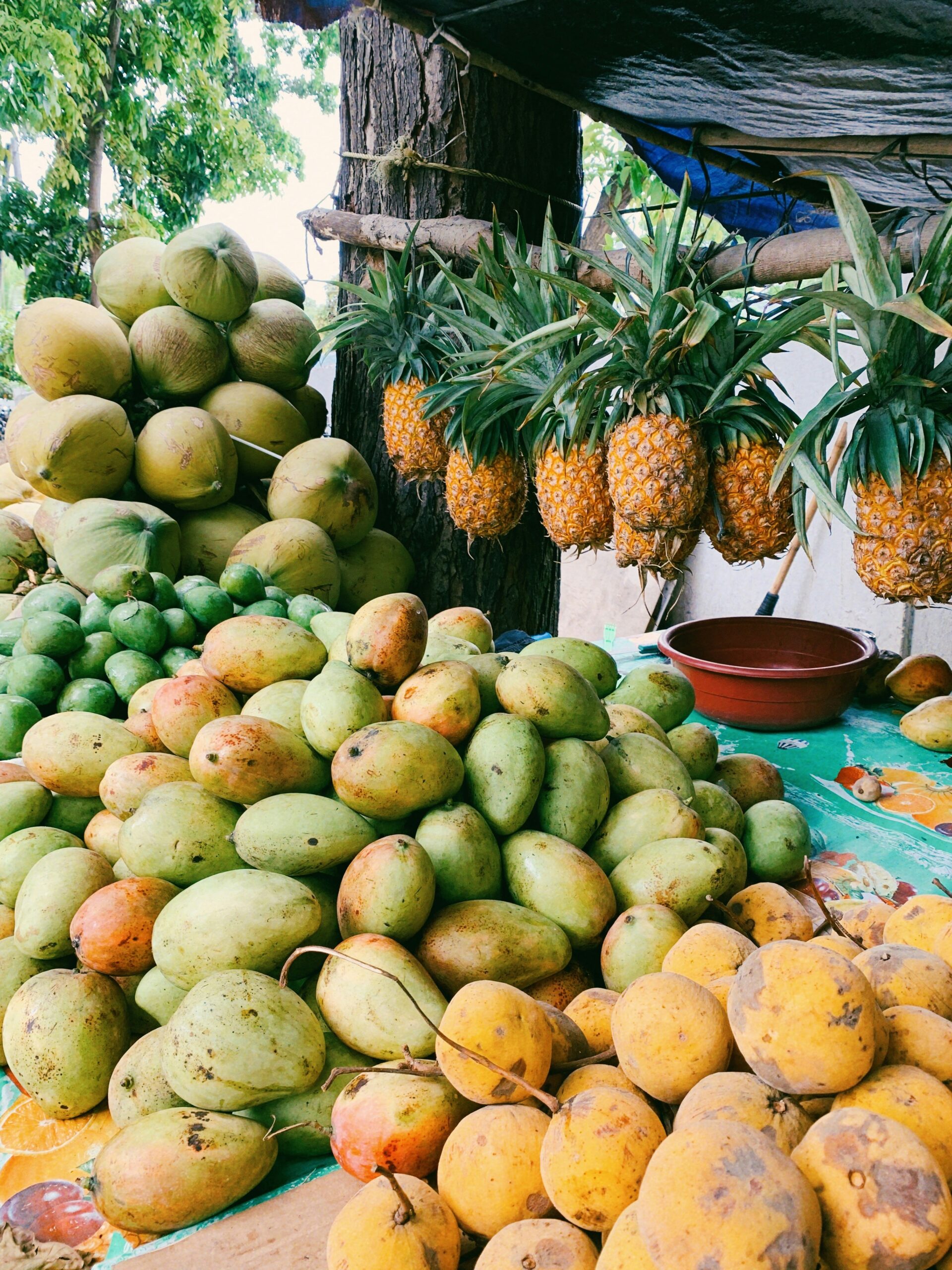
The 19 percent figure that dominated the news cycle is a rate applied to a fraction of Philippine exports, not to all of them. Joey Salceda, former chair of the House Committee on Ways and Means, former presidential economic adviser, and now head of the Institute for Risk and Strategic Studies, explained the arithmetic plainly at a briefing after the deal was announced: Trump's tariff threat was a threat on just 27 percent of Philippine goods, because 73 percent were already exempt in April when Philippine trade negotiators secured their inclusion in Annex II of Executive Order 14257, placing them under preferential tariff rates from existing trade agreements rather than the headline reciprocal rate. Electronics and semiconductors — the single largest category of Philippine exports to the United States, accounting for more than half of total Philippine export revenue according to the Philippine Statistics Authority — carried their own exemption. Agricultural exports worth over one billion dollars carried the same protection, including coconut oil, processed pineapples, desiccated coconuts, bananas, dried mangoes and mangosteens, frozen tuna fillets, and confectionery products, as confirmed by the Department of Trade and Industry.
Those protections expanded further still. On November 14, 2025, President Trump signed a second Executive Order expanding agricultural exemptions retroactively to November 13, with Trade Secretary Cristina Roque announcing that "the majority of our agricultural exports to the United States are now exempted from reciprocal tariffs." The Palace confirmed that more than $1 billion worth of agricultural products now enter America duty-free, accounting for nearly half of the Philippines' $14.5 billion in total exports to the United States. The direction of travel in this tariff story is not toward more burden on Filipino exporters. On the contrary, it is toward less.
Honesty requires noting that not every Filipino has felt the benefit. A December 2025 Nikkei Asia report found individual coconut farmers in Quezon province remaining downbeat, with farmer Ellizer Manza saying the exemptions would have little impact on smallholder livelihoods, and that domestic structural reform matters more than tariff relief. That critique is legitimate and separate from the tariff question; it is a structural argument about the Philippine agricultural economy, not a refutation of the exemptions themselves.
It is worth stating plainly which Philippine industries faced the full headline rate without exemption under the original IEEPA regime, and still lack protection today. The University of the Philippines Center for Integrative and Development Studies identified garments, tobacco, and footwear as among the most heavily affected, noting that approximately 31 percent of Philippine exports to the United States remain subject to the full headline rate, namely men's cotton trousers, leather shoes, knitted shirts, unprocessed tobacco, and cigarettes. Philippine trade officials have confirmed they are working to secure exemptions for garments, textiles, furniture, and automotive products in future rounds of negotiation. Workers in those industries were not protected by the exemption architecture under IEEPA, and they remain unprotected under the current Section 301 regime, though the rate they face has fallen from 19 percent to 12.5 percent. That fact deserves the same plainness as the exemptions themselves.
When those exemptions are counted against the headline rate, Salceda calculated the effective tariff rate on Philippine goods entering the United States at approximately 6.33 percent as of the July 22 deal, the second lowest rate in Asia, behind only oil-exempted Malaysia. That figure has likely fallen further since the November 14 Executive Order expanded agricultural exemptions to cover nearly half of all Philippine exports to the United States. To put that concretely: on every 56,000 pesos worth of Philippine goods shipped to the United States (approximately $1,000 at the 2025 exchange rate of roughly 56 pesos to the dollar), the effective tariff burden at 6.33 percent amounts to about 3,545 pesos rather than the 10,640 pesos the headline rate implies. That difference of more than 7,000 pesos per 56,000 pesos in exports stays in Filipino hands rather than the American treasury. The 19 percent figure that generated alarm is not the rate most Philippine exporters actually pay. It is the rate applied to the minority of Philippine goods not shielded by existing agreements and newly negotiated exemptions. This is not a small distinction. It is the difference between a damaging tariff regime and a manageable one.
The Framing That Missed the Story
Salceda was direct about the narrative problem. "This was never just a 20-to-19 tariff story," he said at the Saturday News Forum in Quezon City on July 26, 2025. "That framing is misleading. What the President did was avert a full 20 percent across-the-board tariff through early engagement and high-level negotiation." He also described the one-percentage-point reduction from 20 to 19 percent as "much ado about nothing," not because it was insignificant, but because the real story was in the exemptions secured quietly before and during President Marcos's July 22 White House visit, not in the headline rate that Trump announced for his domestic audience.
"Trump always plays to his domestic audience," Salceda said. "Plenty of deals can be made with that knowledge." This is not a criticism of American bad faith. It is a description of how trade negotiations actually work: a public announcement calibrated for one audience, and a set of technical exemptions negotiated for another. Filipino readers who consumed only the public announcement received the version designed for Americans, not the version that determines what Philippine exporters actually owe.
The most credible Filipino policy critics deserve a direct hearing. Oikonomia Advisory economist Reinielle Matt Erece acknowledged the deal was "better than nothing" while noting that "the US has the upper hand in negotiations, having obtained zero tariffs in return." UnionBank chief economist Ruben Carlo Asuncion was more measured, observing that "the one-ppt [percentage point] reduction may seem modest" but that it "translates to tens of millions in annual savings for key sectors like electronics." Neither economist called the deal a betrayal. Both called it a starting point, which is precisely what Salceda, Romualdez, and Marcos himself have said it is.
The Asymmetry That Needs Context
The deal's most frequently cited inequity is its asymmetry: Philippine exports to the United States initially faced a 19 percent tariff (now 12.5 percent under Section 301), while American goods entering the Philippines face zero tariffs. Several commentators called this a colonial-era arrangement dressed in modern trade language, and the structural complaint deserves a fair hearing rather than dismissal. It is not an equal exchange on its face.
What that framing omits, however, is where the Philippines stood before this deal. The Generalized System of Preferences, which had granted many Philippine goods zero-tariff access to the American market, lapsed in December 2020 and was never renewed under the Biden administration. The Biden administration also explicitly ruled out a bilateral free trade agreement with the Philippines in April 2023, with U.S. Trade Representative Katherine Tai stating it was not on the negotiating table. The Philippines entered the Trump tariff environment without a bilateral FTA, without renewed GSP access, and facing a threatened 20 percent across-the-board tariff on the 27 percent of its goods not already protected by Annex II exemptions.
Against that baseline, rather than against some imagined equal partnership that did not exist, the July 22 deal represents a net improvement, not a deterioration. The Board of Investments' Managing Head, Trade Undersecretary Ceferino Rodolfo, confirmed that the Trump administration's key officials, including U.S. Trade Representative Jamieson Greer and Secretary of State Marco Rubio, hold a "welcoming attitude" toward a bilateral FTA and sectoral agreement with the Philippines, a posture the Biden administration had explicitly refused to adopt. The Philippine Exporters Confederation noted that exemptions on coconuts, pineapples, bananas, and mangoes are "expected to improve demand, stabilize prices, and directly benefit exporters, farmers, and rural communities across the Philippines." PCCI President Consul Enunina V. Mangio was equally direct: "The exemptions will provide much-needed relief to exporters, help safeguard jobs, and strengthen the competitiveness of Philippine products in one of our most important markets." Executive Secretary Ralph G. Recto, speaking at a Senate hearing on November 18, was blunter still: "It's positive for us. I think President Trump realized that imposing tariffs on agriculture is inflationary, so he removed them. That's good for us."
The Door the Deal Opens
The most consequential argument in favor of this tariff arrangement is not what it contains today but what it may produce tomorrow. Salceda was unambiguous: "A Philippines-US free trade agreement is becoming increasingly possible. Being a net exporter to the US, we stand to benefit from such a deal." The Philippines exported $12.12 billion in goods to the United States in 2024, while the United States exported approximately $9.3 billion to the Philippines, meaning the Philippines runs a trade surplus with its largest export market. A full bilateral FTA, which would eliminate or substantially reduce the current 12.5 percent headline rate across all categories, would benefit the Philippines more than it would benefit the United States, precisely because the Philippines sells more to America than America sells to the Philippines. In practical terms, that means lower tariff costs for Philippine semiconductor workers, banana farmers, and coconut oil producers who depend on the American market. The headline rate, already reduced from 19 to 12.5 percent and cushioned further by exemptions, would fall to zero under a full agreement.
The Biden administration refused to open that door. The current arrangement, for all its asymmetry, has cracked it. Salceda's reading of the one-percentage-point reduction from 20 to 19 percent was precisely this: not a meaningful concession in itself, but a goodwill signal that talks can continue and that a larger agreement is within reach. Philippine Ambassador to Washington Jose Manuel Romualdez confirmed in July 2025 that "there will still be more discussions ahead," and that the 19 percent rate was "a good deal for the moment" rather than a final settlement. If those discussions stall and no FTA materializes, the Philippines will still face a 12.5 percent headline rate on approximately 31 percent of its exports to the United States. That is a worse outcome than a full agreement, but still better than the threatened 20 percent across-the-board rate the Philippines faced before Marcos's July 22 White House visit, and still cushioned by the exemptions that protect electronics and the majority of agricultural exports.
What the Electronics Exemption Actually Protects
Electronics account for approximately 53 percent of all Philippine export revenue, according to the Philippine Statistics Authority's 2024 trade report, with total earnings of $39.09 billion. Of that, $6.4 billion flowed to the United States. The Philippine electronics industry employs over 3 million workers across direct manufacturing and supporting industries, according to SEIPI, the Semiconductor and Electronics Industries in the Philippines Foundation — workers in Laguna, Cavite, Cebu, and across CALABARZON whose livelihoods depend on continued access to the American market. The electronics exemption under Annex II of Executive Order 14257 protected that access from the headline 19 percent rate. The Department of Economy, Planning, and Development estimated that the 19 percent tariff, with the electronics exemption in place, would reduce Philippine GDP by approximately 0.12 percent, or roughly $489.6 million, an impact the department described as limited to "the immediate term only" and likely to "turn positive over the medium term" as trade adjustments are made.
The Philippine government's own economic planners, in other words, regard the tariff's GDP impact as modest and temporary, not structural or permanent. Nomura Global Markets Research estimated a larger 0.4 percentage point GDP impact in July, before the electronics exemption was fully confirmed and before the November 14 Executive Order expanded agricultural exemptions further, which accounts for the difference between the two figures.
What Changed in 2026: The Legal Ground Shifted, the Direction Did Not
The tariff architecture described above no longer exists in the form it took in 2025. On February 20, 2026, the United States Supreme Court struck down all tariffs imposed under the International Emergency Economic Powers Act in a 6-3 decision authored by Chief Justice Roberts (Learning Resources, Inc. v. Trump), holding that IEEPA does not authorize the President to impose tariffs and that the power to do so is reserved to Congress under Article I of the Constitution. All IEEPA tariffs, including the 19 percent reciprocal tariff on the Philippines, terminated at 12:00 AM on February 24, 2026. The Palace confirmed that the majority of Philippine exports "already enjoyed zero tariff in the US even before this decision," a statement consistent with the exemption architecture this essay has documented.
A Filipino reader inclined to view this ruling as evidence that America imposed unlawful tariffs on Philippine goods for seven months should consider what the ruling actually demonstrates. The American judiciary overrode its own President's trade policy on constitutional grounds. No comparable institution exists in China, Russia, or any other major trading partner in the Pacific. The Supreme Court did not act on behalf of the Philippines; it acted on behalf of American importers who challenged the tariffs in court. The result, however, was the same: an American institution, operating under the rule of law, struck down the very tariffs that Philippine critics called exploitative. That is not the behavior of a predatory power. It is the behavior of a constitutional republic whose internal checks function even when they are politically inconvenient for the sitting President.
On the same day the Supreme Court ruled, President Trump invoked Section 122 of the Trade Act of 1974 to impose a temporary 10 percent global tariff on all trading partners, including the Philippines. Section 122 tariffs are capped at 150 days and require Congressional approval for extension. This was a stopgap, not a strategy.
When the Section 122 tariffs expired on July 23, 2026, the Trump administration replaced them with permanent tariffs under Section 301 of the Trade Act of 1974, citing the failure of 60 trading partners to prohibit or effectively enforce bans on the importation of goods produced with forced labor. The Philippines was placed in the higher tier at 12.5 percent rather than 10 percent, because the USTR determined that the Philippines lacks a specific statutory prohibition on forced labor imports. The Department of Foreign Affairs rejected this characterization, with spokesperson Analyn Ratonel stating that "the Philippines has long demonstrated that its locally produced goods, including those exported to the US, do not rely on forced labor." Ambassador Romualdez confirmed that negotiations continue: "We can still negotiate," he told Rappler on July 25, 2026.
It is important to understand what the forced labor finding is and what it is not. It is not an accusation that Filipino workers are enslaved or that Philippine-made goods are produced through coercion. It is a procedural determination that the Philippines lacks a specific statutory import ban on goods produced with forced labor elsewhere, particularly goods transshipped from countries with well-documented forced labor practices, including China and Myanmar. The distinction matters because the fix is legislative, not moral. Cambodia, India, Sri Lanka, Guatemala, Honduras, and Trinidad and Tobago each enacted forced labor import bans between June and July 2026 and were moved to the lower 10 percent tier as a result. These are not countries with stronger labor records than the Philippines; they are countries that passed a specific law faster than the Philippines did. Salceda has already responded by pushing House Bill legislation to enact a comparable Philippine prohibition. "Of course, we want to protect Philippine exporters, Filipino jobs, and our competitiveness in the U.S. market," he said. "A 12.5-percent additional tariff has real consequences for our industries." The legislation, if passed, would give the Philippines a clear basis to request reclassification to the 10 percent tier, reducing the headline rate by a further 2.5 percentage points through a one-paragraph domestic statute rather than through negotiation with Washington. The forced labor characterization is a problem the Philippine Congress can solve on its own, and Salceda is already telling them to solve it.
The executive branch has not waited for Congress. On August 6, 2026, Palace press officer Claire Castro confirmed that the DTI, DOLE, and DOF have issued a Joint Administrative Order establishing a mechanism for investigating and blocking goods produced with forced labor, and that the government's explicit target is to bring the Philippine rate from 12.5 to 10 percent. "We have many laws proving that forced labor is prohibited," Castro said. "There are penalties for employers who are caught imposing forced labor."
The urgency is not abstract. Indonesia and Malaysia both received the 10 percent rate, as confirmed by the Dateline Philippines on August 8, 2026, leaving Philippine goods at a 2.5-percentage-point disadvantage against direct ASEAN competitors for the same American buyers. Every month the Philippines remains in the higher tier is a month its garment, footwear, and tobacco exporters lose ground to neighbors who moved faster.
Philexport President Sergio Ortiz-Luis Jr. was more cautious, noting that with exemptions under the new regime still unclear, Philippine exporters are "likely to hold back on production and defer orders until there is greater clarity." That caution is warranted, and exporters waiting for clarity have every reason to be careful. As of September 18, 2026, DTI Undersecretary Gepty confirmed to Context.ph that the Philippines is pursuing the tariff reduction on a bilateral track with Washington, separate from broader ASEAN-US discussions, and that negotiations remain active. Three facts, however, deserve equal weight. First, the headline rate the Philippines now faces is 12.5 percent, not 19 percent; the direction of travel since the July 2025 deal has been downward, not upward. Second, electronics, semiconductors, computers, tropical agriculture, pharmaceuticals, and critical minerals are among approximately 2,120 product-level exemptions under Part A of the Section 301 regime, meaning the exemptions that shielded the Philippines' most important export categories under IEEPA have substantially survived the legal transition under a different statutory authority. Third, the path from 12.5 percent to 10 percent is explicitly open through domestic legislation that is already before the Philippine House of Representatives. A headline rate that started at a threatened 20 percent, was negotiated to 19, was struck down entirely by the Supreme Court, was temporarily replaced at 10 percent, and now stands at 12.5 percent with a legislative pathway to 10, is not the trajectory of a nation being exploited. It is the trajectory of a negotiation still in progress, between allies who have every reason to keep talking.
The Verdict
My friends and countrymen, the case against the tariff arrangement that began this story rested on the headline figure of 19 percent. That figure no longer applies. The current headline rate is 12.5 percent under Section 301, with electronics, semiconductors, tropical agriculture, and over two thousand additional product categories exempted. The case for a measured assessment rests on the effective rate of 6.33 percent as of the July 2025 deal (a figure that has since fallen further), the survival of the exemption architecture through a Supreme Court ruling and two changes of legal authority, the opening of a path toward a full bilateral FTA that the previous American administration refused to walk, a clear legislative pathway from 12.5 percent to 10 percent through domestic action, and the Philippine government's own finding that the GDP impact is small and short-term. None of this means the arrangement is ideal. The Philippine government itself disputes the forced labor characterization, and the 12.5 percent rate remains higher than the near-zero access the Philippines enjoyed under GSP before 2020. Further negotiation is both necessary and possible. Philippine and American negotiators owe that effort most urgently to the garment, footwear, and tobacco workers whose industries remain subject to the full headline rate, and most visibly to the more than 3 million electronics workers whose access to the American market this deal has already shielded.
A commentator who tells you only that America has imposed tariffs on Philippine goods, without naming the exemptions, the effective rate, the downward trajectory from 20 to 19 to 12.5 percent, and the legislative pathway to 10, is telling you the version designed for an American domestic audience. The version designed for an informed Filipino reader includes all of it. It includes the words of Joey Salceda, who concluded in July 2025 that the finer details of the Marcos-Trump negotiation "will benefit the Philippines in the long run," and who responded to the 2026 developments not with retreat but with legislation to bring the Philippines into the lower tariff tier. That is not the conclusion of a man who was deceived, nor of a man who was uncritical; it is the conclusion of a man who called the headline reduction "much ado about nothing" and still read the fine print and found the deal worth taking, a conclusion, moreover, that Roque, Recto, Mangio, and Romualdez have each reached independently from their own vantage points.
For those who wish to act rather than wait, the path is clear: Philippine exporters should verify whether their specific products fall under the Part A exemptions of the Section 301 regime. Filipino citizens should urge their Congressional representatives to pass Salceda's forced labor import ban legislation, which is the single fastest route from 12.5 to 10 percent. Philippine trade associations should continue engaging with the DTI's bilateral submissions to Washington. The tariff story is not over. It is being written, and Filipinos who read the fine print can help write the next chapter.
Long live the prosperity of the Philippines, and long live our alliance with America!
Stay informed!
Join a community of engaged patriots passionate about liberty, good governance, and strengthening U.S.-Philippine relations. By subscribing to Marcial's Law, you’ll receive exclusive insights and updates on policies that shape the future of both nations. Be part of the conversation that challenges the status quo and advocates for a return to constitutional principles. Subscribe now and never miss a critical update!