I seek to empower people by giving them something to ponder.
By Marcial Bonifacio
7-21-26
Updated:
7-25-26
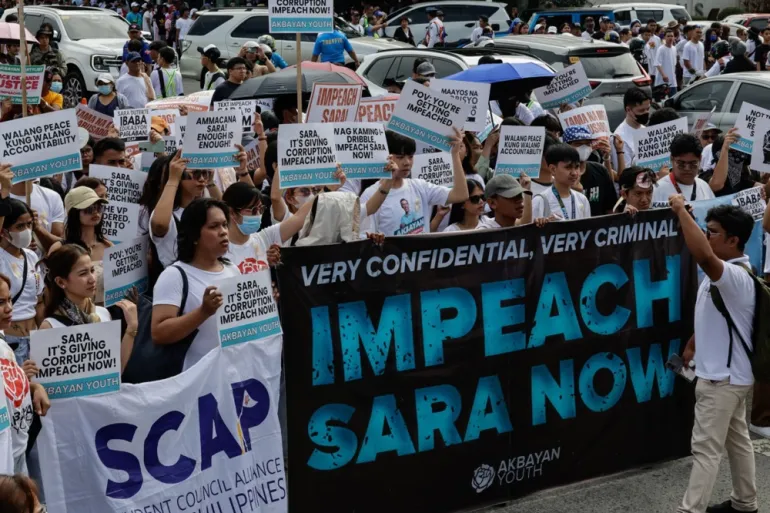
My friends and countrymen, the Senate of the Philippines now sits as an impeachment court to try Vice President Sara Duterte for the second time in her single term of office, a distinction held by no other Filipino official since the restoration of our democracy in 1986. The House has already impeached her; what remains is whether the Senate will convict. The trial that began on July 6, 2026, is not a spectacle of dynastic rivalry, however much the Marcos-Duterte feud tempts commentators to treat it as one. It is a constitutional proceeding grounded in specific articles, specific sums of money, and a specific threat against the life of a sitting president. I have compiled the evidence for your consideration, and I trust you, as I always have, to draw the conclusion it demands.
The Constitutional Foundation
Article XI, Section 3(5) of the 1987 Constitution bars a second impeachment complaint against the same official within one year of the first. This is precisely why Duterte's first impeachment, initiated in February 2025, was struck down by the Supreme Court in July 2025 on procedural grounds, and precisely why the four complaints filed in February 2026 waited until the one-year bar expired before they were formally initiated. The process that produced the current Articles of Impeachment on May 11, 2026, when 257 of 318 House members voted to impeach her, followed the very roadmap the Supreme Court itself laid down. This is not a shortcut. It is compliance with the Court's own ruling.
Once the Articles reached the Senate, the Constitution left no room for delay or dismissal. Former Supreme Court Associate Justice Antonio Carpio stated plainly that once the Articles of Impeachment are submitted to the Senate, trial must proceed at once, and that the process cannot be terminated by a mere motion to dismiss. Carpio noted further that the Constitution's own Filipino-language text uses the word "forthwith," meaning immediately, leaving no ambiguity for senators inclined to slow-walk the proceedings. This is not a partisan reading. It is the plain text of our founding law.
The Legal Grounds
The Articles of Impeachment allege culpable violation of the Constitution, graft and corruption, betrayal of public trust, bribery, and other high crimes. Article I concerns the alleged misuse of confidential funds: P500 million from the Office of the Vice President and P112.5 million from the Department of Education during her tenure as its secretary, totaling roughly P612.5 million. The Commission on Audit itself flagged P125 million of these confidential funds in July 2023 for having been spent in full within eleven days. Under Republic Act 3019, the Anti-Graft and Corrupt Practices Act, public officials who fail to account for public funds entrusted to them face both administrative and criminal liability, a standard the Commission on Audit's own finding of an eleven-day disbursement window was designed to test. Article II concerns unexplained wealth disproportionate to her lawful income. Article III concerns bribery and procurement irregularities at the Department of Education. Article IV concerns her documented threat against the lives of President Ferdinand Marcos Jr., First Lady Liza Araneta-Marcos, and former House Speaker Martin Romualdez.
It is worth stating plainly what impeachment is and is not. It is not a criminal trial, and conviction here would not brand Duterte a felon; it would only end her tenure and bar her from future office. The Constitution set a lower threshold, betrayal of public trust, precisely because the public should not have to wait years for a criminal court before removing an official found unfit to hold power.
House Representative Terry Ridon, one of the complainants, described the scale of the flagged transactions as impossible to explain through lawful income or declared assets, calling the House vote a constitutional act of accountability rather than a political exercise. Regardless of the complainant's motives, the underlying claim is a legal one, and it deserves a legal answer, not a political one.
Duterte's counsel calls the case against her baseless and the product of a family feud with the Marcos administration. The prosecution calls the same set of facts a matter of public trust owed to the electorate. Both claims cannot be weighed by rhetoric. They can only be weighed against the Commission on Audit's own findings, the AMLC's own reports, and the Vice President's own recorded words, none of which originate with her political rivals.
The defense's strongest procedural objection came not from Duterte's own counsel but from the bench itself. Senator Pia Cayetano, presiding as a judge in the case, invoked the fruit of the poisonous tree doctrine during the trial's seventh day, questioning whether the Anti-Money Laundering Council had any legal basis to disclose Duterte's financial records to the House committee in the first place. Her brother, Senator Alan Peter Cayetano, pressed the same concern from a different angle, asking prosecutor Chel Diokno directly whether the House possessed evidence of wrongdoing or had impeached first and gone looking for evidence afterward. Both senators invoked Stonehill v. Diokno, a 1967 Supreme Court ruling that struck down evidence gathered under an unconstitutional general warrant, a precedent that happens to have been decided against the prosecutor's own father and was previously raised in Renato Corona's defense as well.
The prosecution's answer rested on a narrower reading of the statute. Diokno argued that Section 8-A of the Anti-Money Laundering Act was written to prevent unauthorized leaks by individual AMLC officials, not to bar a subpoena issued by a lawful tribunal, including an impeachment court. Senator Cayetano pressed further still, asking Diokno directly, "Do you have the evidence, or are you fishing for the evidence?" His concern was one of definition as much as procedure. Unexplained wealth and ill-gotten wealth are not the same claim. The first describes a gap between declared income and actual net worth. The second describes a conclusion that the gap was filled unlawfully, and Cayetano questioned whether the prosecution was permitted to subpoena a lifetime of financial records before Duterte had any chance to close that gap herself.
Diokno's answer rested on Republic Act No. 1379, the law governing forfeiture of unlawfully acquired property, which holds that a documented gap of this kind creates a prima facie presumption that the excess was unlawfully obtained, a presumption the official may rebut with her own explanation. Wealth traceable to an appreciated land sale would be explained wealth, Diokno said, and only the records themselves, not an assumption of guilt, would show which kind Duterte's is. "That's precisely why, your honor, they call it 'unexplained wealth,'" he told the court. The impeachment court weighed both arguments and ruled in favor of the subpoenas. The objection was heard. It did not prevail. Even so, five senator-judges, Alan Peter Cayetano, Pia Cayetano, Loren Legarda, Imee Marcos, and Camille Villar, later filed separate manifestations registering continued reservations about the subpoena's scope. The ruling settled the procedure. It did not settle every judge's mind.
The Criminal Exposure
Beyond the impeachment court, Duterte and her husband, lawyer Manases Carpio, face independent criminal exposure. The Anti-Money Laundering Council confirmed that banks submitted 630 covered transaction reports and 33 suspicious transaction reports tied to accounts linked to the couple, amounting to roughly P6.77 billion in transactions dating back to 2006. Suspicious transaction reports of this volume are the statutory trigger under the Anti-Money Laundering Act, Republic Act 9160, for further civil forfeiture and criminal investigation, independent of whatever the Senate decides. The National Bureau of Investigation separately reported that handwriting analysis found signatures on confidential-fund liquidation documents inconsistent with authentic specimens, a finding at the center of allegations of falsification. None of these findings are convictions. They are, however, documented findings by government agencies charged with exactly this kind of forensic work, and they establish that Duterte's legal exposure does not end even if the Senate acquits her.
The Moral Argument
Here is where the case rests most heavily, my friends. Betrayal of public trust is not merely a legal category under our Constitution. It is a moral standard, and it applies to every official regardless of family name, regardless of popularity, and regardless of which political dynasty they descend from. Duterte's own words, delivered in a profanity-laced broadcast in November 2024, included an instruction that if she were killed, someone should go kill the President, the First Lady, and the former Speaker. She has never disavowed the remark as a joke. In fact, she said so herself immediately after making the threat, repeating the phrase for emphasis: "No joke. No joke."
Senior NBI Agent John Mark Calilung, the prosecution's first witness, testified under oath that the threat was absolute, telling the impeachment court it did not depend on Duterte's own survival to become real. A second NBI officer, Regional Director Jeremy Lotoc, went further days later, calling the threat "serious, actual, and real" and warning that leaving it unaddressed risked plunging the country into chaos. Two officers from the same bureau, testifying on separate days, reached the identical conclusion independently. Duterte's own defense is that the threat was conditional revenge, activated only by her own death, and therefore protected as an exercise of free expression rather than a genuine, actionable threat. Calilung's testimony that the threat was absolute cuts against this framing directly. A threat need not be immediate to be real: it commits a named person to kill three others the moment a single condition is met, and it is the commitment, not its timing, that the law treats as the offense.
On the trial's eighth day, NBI Director Melvin Matibag added a third layer of evidence, presenting the court with video from 2011 showing Duterte, then mayor of Davao City, striking a court sheriff four times during a property dispute. Matibag testified that pattern of violence is one of five factors the NBI weighs when assessing whether a threat is serious, a framework the bureau has said is modeled on the one used by the United States Secret Service. As part of that same assessment, Matibag testified that his task force had reviewed an affidavit filed with the International Criminal Court by former Davao police officer Arturo Lascañas, alleging Duterte's own involvement in the anti-drug operation known as Oplan Tokhang, the very operation at the center of her father's pending ICC prosecution. The following day, under cross-examination by the defense, Matibag went further still, testifying that Duterte's own statement was already an admission consummating a betrayal of public trust, since her oath of office bound her to execute the law and do justice to every man, not to execute the President. The defense moved to strike the remark from the record. The motion was overruled.
The record shows the assassination threat did not stand alone. In October 2024, Duterte warned Senator Imee Marcos that she would dig up her father's remains and throw them into the West Philippine Sea. Weeks earlier, she had publicly described her fantasy of beheading Marcos Jr.
Surely, Duterte, being a trained legal mind, does not need to be told that a documented pattern of this kind carries evidentiary weight in a court of impeachment. Indeed, a public official entrusted with the second-highest office in the land owes the nation sobriety in moments of crisis, not incitement, especially one elected by 32,208,417 voters--- the highest vote total of any vice-presidential candidate in Philippine history.
In 2012, the Senate convicted and permanently disqualified Chief Justice Renato Corona on a fraction of the documented irregularities now before it. A standard applied to a chief justice cannot quietly become optional for a vice president simply because her father commands a national following. The same standard I would apply to any official of any party, I apply here: documented misuse of public funds, a documented threat against the life of a president, and documented financial irregularities running into the billions of pesos are not matters that any elected official, however popular, should escape simply because a two-thirds vote in a divided Senate is difficult to secure.
Verdict
The evidence assembled here is not speculation. It is drawn from the Commission on Audit, the Anti-Money Laundering Council, the National Bureau of Investigation, sworn House testimony, and the Vice President's own recorded words. Even senator-judges sympathetic to Duterte's cause raised their strongest procedural objection to this evidence and lost. The Constitution requires 16 of 24 senators to convict. Whether the Senate finds the political courage to reach that number remains uncertain, given the shifting allegiances within that chamber. But the question before every citizen, Filipino and American observer alike, is not whether Sara Duterte is popular. It is whether a public officer who threatens the life of a sitting president and stands accused of misappropriating hundreds of millions of pesos in confidential funds should be permitted to remain a heartbeat from the presidency. Which standard would you rather see applied to those who govern you: the standard of loyalty to a name, or the standard of loyalty to the Constitution?
One more fact belongs on the record before you answer. Duterte herself has not once appeared before the court since the trial began on July 6. On July 16, with travel authority approved by the Office of the President, she left the country on a trip that included a stop in The Hague, the same city where her father remains in International Criminal Court detention awaiting his own trial for crimes against humanity. The House prosecution panel's farewell was brief and pointed. "Safe travels and happy trip, and hope she'll be back soon," said Representative Zia Alonto Adiong, the panel's spokesman.
My friends and countrymen, there is no shame in demanding accountability from those we once trusted. There is only shame in looking away.
Long live the rule of law, and long live the Republic of the Philippines!
Stay informed!
Join a community of engaged patriots passionate about liberty, good governance, and strengthening U.S.-Philippine relations. By subscribing to Marcial's Law, you’ll receive exclusive insights and updates on policies that shape the future of both nations. Be part of the conversation that challenges the status quo and advocates for a return to constitutional principles. Subscribe now and never miss a critical update!




[…] my commentary, "The Case for the Conviction of Vice President Sara Duterte," I examined the broader constitutional grounds for her conviction. The constitutional framework […]
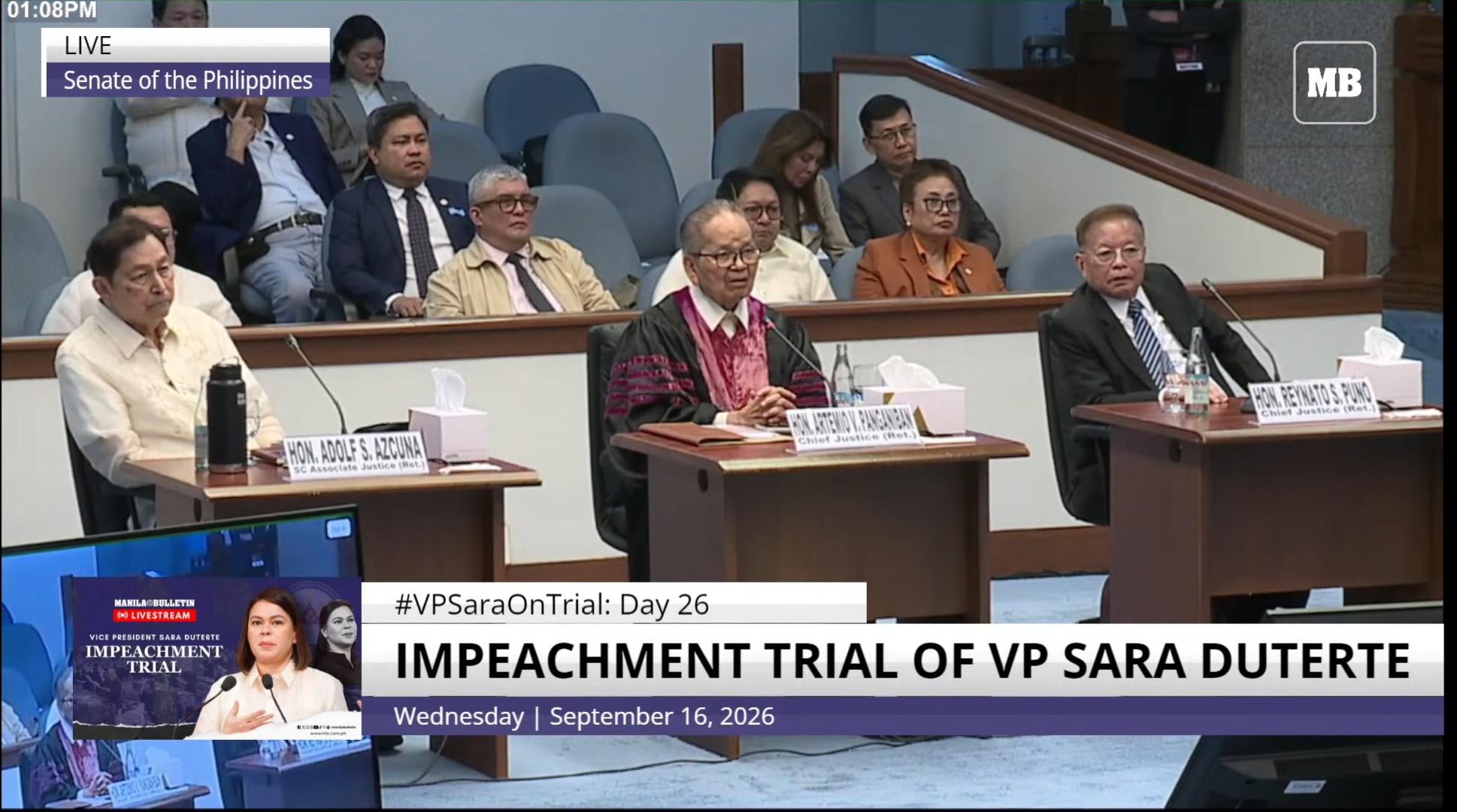
[…] the impeachment trial of Vice President Sara Duterte (about which I have written separately in The Case for the Conviction of Vice President Sara Duterte) has arrived at a constitutional crossroads. On September 16, 2026, the twenty-sixth day of trial, […]
[…] is an explainer to Vice President Sara Duterte's impeachment trial, which I have written about in The Case for the Conviction of Vice President Sara Duterte. The trial has placed a term at the center of national conversation that most citizens have heard […]
[…] day of Vice President Sara Duterte's impeachment trial (about which I have written separately in The Case for the Conviction of Vice President Sara Duterte), Senator-Judge Robin Padilla attempted something bold: to place the names on the Office of the […]
[…] Two Objections at VP Sara Duterte’s Impeachment Trial: "The Fruit of… 2The Case for the Conviction of Vice President Sara Duterte 3When the Constitution Does Not Say: Presiding Officers, Precedent, & VP […]