I seek to empower people by giving them something to ponder.
By Marcial Bonifacio
7/9/26
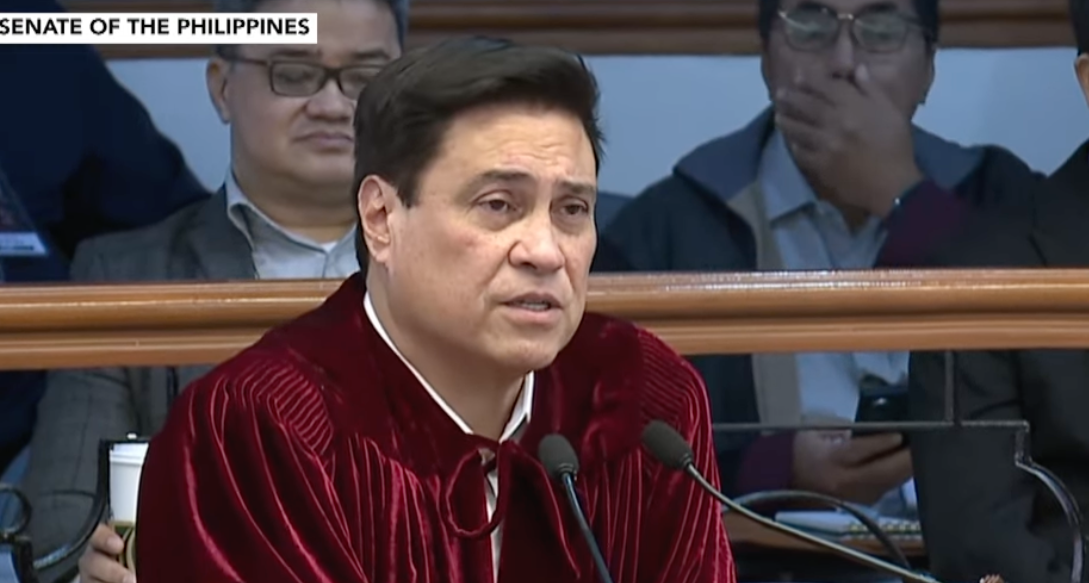
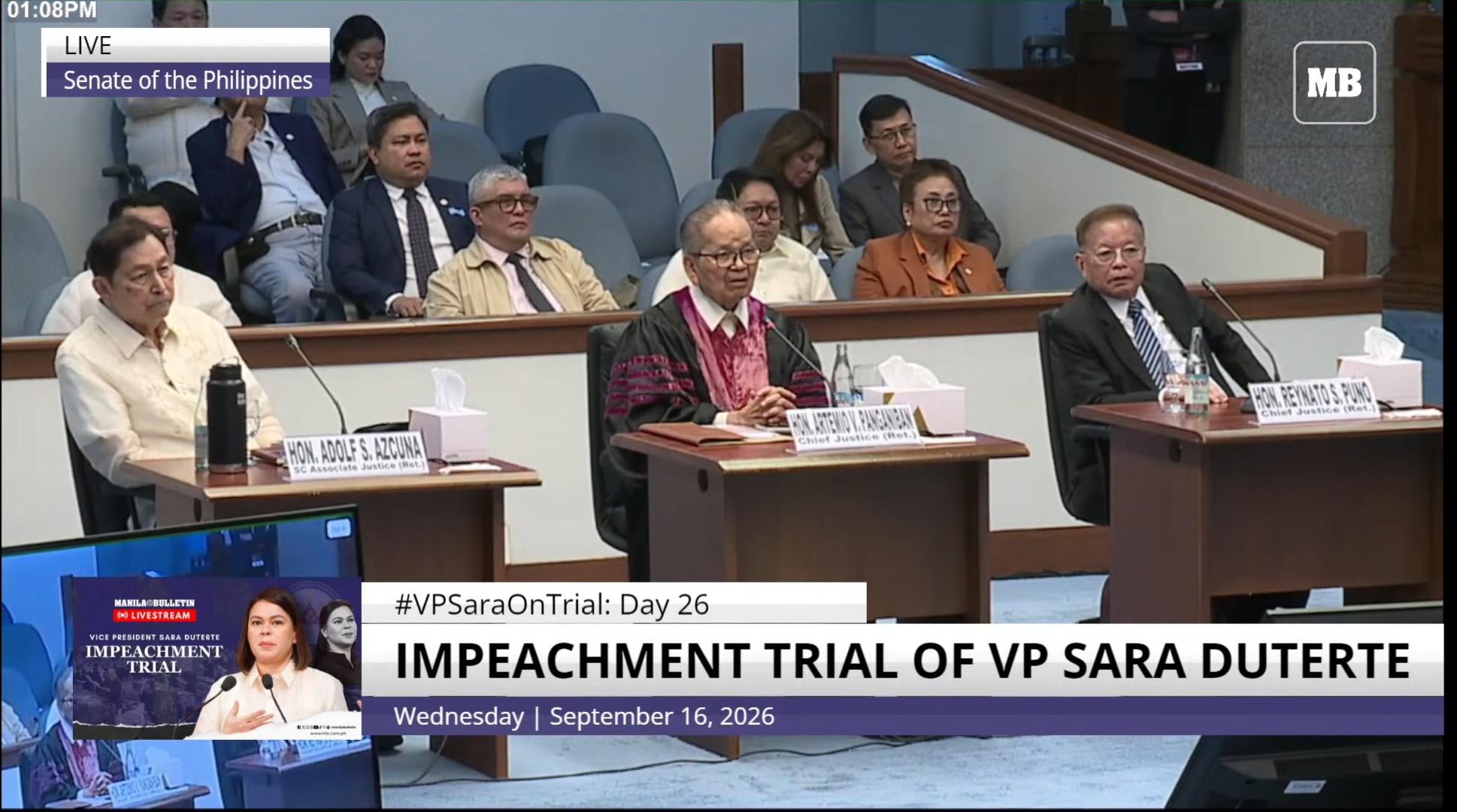
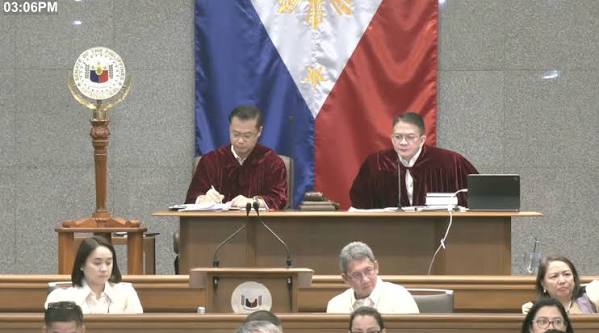
My friends and countrymen, both American and Filipino, on July 6, 2026, the Senate impeachment court of the Republic of the Philippines opened the trial of Vice President Sara Duterte, and within the first half hour, before a single witness was called, the senator-judges were locked in a constitutional dispute over who was even permitted to hold the gavel. Senator Alan Peter Cayetano, the ousted Senate President, insisted that only the sitting Senate President could preside over the trial. Senate President Sherwin Gatchalian and the majority bloc disagreed, and by a vote of 12 to 8, the court elected Senator Francis "Chiz" Escudero to preside instead. This dispute is not merely a Philippine curiosity. It sits atop the same constitutional silence that the United States has wrestled with since 1787, and understanding how the two nations have handled that silence tells us something important about what each constitutional order actually protects.
What Both Constitutions Actually Say
Article XI, Section 3, Paragraph 6 of the 1987 Philippine Constitution states that when the President is on trial, the Chief Justice presides but does not vote, and conviction requires the concurrence of two-thirds of the Senate. The American original is nearly identical in structure. Article I, Section 3, Clause 6 of the United States Constitution provides that the Senate shall have the sole power to try all impeachments, and that when the President of the United States is tried, the Chief Justice shall preside, with conviction requiring the concurrence of two-thirds of the members present.
Both documents name a presiding officer for exactly one scenario: the impeachment of the sitting president. Both documents are silent on every other case. This is not an oversight. It is a structural choice, and Cayetano built his entire argument on the theory that the framers of both nations left that silence intentional in a specific direction, toward the Senate President by default.
Why the Chief Justice Only Presides for the President
The American rationale is documented and specific. The Chief Justice presides over a presidential trial because the ordinary presiding officer of the Senate is the Vice President, and the Vice President cannot be permitted to preside over the proceeding that could elevate him to the presidency. As the Library of Congress's Constitution Annotated explains, the framers built this exception around a specific danger: a sitting Vice President judging the very trial that might hand him the presidency. That risk was not theoretical in the founding era, when a President and Vice President could come from opposing factions rather than a single ticket, as the pre-Twelfth Amendment system allowed.
The Philippines inherited this same design, and for the same reason. Neither constitution asked the Chief Justice to preside as a general safeguard of gravitas. Both asked him to preside to solve one specific conflict of interest, and only that one.
What Hamilton's Reasoning Suggests, and What It Does Not
America's founders left no record addressing a Vice President's own impeachment trial directly, and honesty requires saying so before saying anything else. However, Alexander Hamilton did explain, in Federalist 65, why the Senate was entrusted with impeachment at all, and why the Chief Justice's role was carved out as narrowly as it was. Hamilton considered and rejected uniting the Supreme Court with the Senate as the impeachment tribunal, reasoning that the same judges might later face the convicted official again in a criminal proceeding, and that having tried him once, they could not be trusted to judge him a second time without prejudice. Giving the Chief Justice a seat only in presidential trials was, in Hamilton's own words, "the prudent mean" between two flawed extremes, a partial adoption of judicial involvement without its full cost.
That reasoning was built for one specific problem: the Vice President, as the Senate's ordinary presiding officer, could not be trusted to preside over a trial that might elevate him to the presidency he stood to inherit. Nothing in Hamilton's argument addresses what happens when the Vice President is not the beneficiary of the trial's outcome but its subject. The founders solved the conflict they saw coming. They left unaddressed the one they did not.
This matters for both nations weighing the current dispute. It means the American constitutional design was never silent by accident on the presidential case, and never silent by oversight on the vice-presidential case either. It was silent because the specific problem of a sitting Vice President as defendant did not present itself to a convention working from the more urgent fear of executive overreach. Cayetano's framers'-intent argument in Manila rests on an actual, documented convention exchange. An American framers'-intent argument on this exact question would rest on inference from adjacent reasoning, not a comparable exchange, and the piece should not claim more certainty for one side than the record permits.
The Genuinely Unsettled Question: Who Presides Over a Vice President's Trial?
Here the comparison sharpens considerably, because the American Constitution has never actually answered who presides when a Vice President, not a President, stands trial. The Congressional Research Service's own account of Senate impeachment procedure confirms the gap directly: outside the four requirements the Constitution itself specifies, the Senate writes its own rulebook for every trial, and no rule in that book has ever named who takes the gavel when a Vice President, rather than a President, sits in the dock. No provision addresses a sitting Vice President as defendant, and it is doubtful the Vice President would be permitted to preside over their own trial, since as president of the Senate, the Vice President would ordinarily preside over every other impeachment. Spiro Agnew resigned in 1973 before it came to that. The question Cayetano and Gatchalian argued over in Manila this month is, in the American system, not a resolved precedent at all. It is an open constitutional gap, no different in kind.
Precedent for a Senate-Elected Presiding Officer
The United States has, however, tested a related question and settled it by vote rather than by court order. During Donald Trump's second impeachment trial in 2021, Senate Republicans argued the Chief Justice was constitutionally required to preside even after Trump had left office, though that objection was entangled with a separate dispute over whether a former officeholder could be tried at all. The Senate rejected the presiding-officer argument by a vote of 55 to 45, and Senator Patrick Leahy, the President pro tempore, presided instead. That is the closest American analogue to what happened in Manila. A minority raised a constitutional objection to the presiding officer's authority. The body did not accept the objection as self-executing. It put the question to a vote and moved forward with its chosen presiding officer.
The parallel extends further into procedure. Under long-standing Senate precedent, constitutional points of order in impeachment trials are not ruled on by the presiding officer alone. They are submitted to the full body for a vote. This is precisely what Escudero did when he declined to rule on Cayetano's objection himself and instead treated the matter as one for the Senate to resolve through the ballot, a procedural instinct both chambers apparently share.
Where the Two Situations Diverge
Here the parallel breaks, and it breaks in a way that matters more than the presiding officer question itself. The American precedent involved no dispute over whether Leahy was validly the President pro tempore, nor any question about whether the session that seated him was properly convened. The fight was confined to the single constitutional question on the table.
The Philippine dispute is layered atop a second, unresolved crisis: whether the June 3, 2026 Senate session that removed Cayetano as Senate President, installed Gatchalian, and amended the impeachment rules was itself valid. Petitioners before the Supreme Court, in a Very Urgent Manifestation with Motion filed the same day the trial opened, cite Senate attendance records showing only 12 of 24 senators present at that session and argue that if it lacked a proper quorum, everything built upon it, including the amended rule and Escudero's election, is void as well. University of the Philippines constitutional law professor Paolo Tamase offered a narrower reading of the underlying question, telling Rappler that "the Constitution only designated a specific presiding officer for the impeachment of a President, taking that from the US Constitution." Everything else, in his reading, was left open to the Senate itself. But Tamase's reading answers the constitutional silence question. It does not touch the separate quorum and legitimacy question that the Cayetano bloc has placed before the Supreme Court.
The Framers' Intent Argument, and Its Limits
Cayetano's strongest evidentiary claim was that the 1986 Constitutional Commission considered and withdrew an amendment naming the Senate President as presiding officer, not because it was rejected, but because commissioners believed it was already understood. He invoked the exchange involving future Chief Justice Hilario Davide Jr. to support this reading, and unbroken practice for nearly three decades appeared to bear it out. Davide himself, as sitting Chief Justice, presided over the 2000 to 2001 impeachment trial of President Joseph Estrada, the one instance where the Constitution's own presidential-trial rule applied without dispute. Cayetano is entitled to his inference from the withdrawn amendment. However, an inference is not a ruling, and Senator Kiko Pangilinan countered with the text itself, noting that nowhere in the Constitution's provisions on impeachment does it state that the Senate President must preside over any trial but the President's. The American record offers no comparably specific withdrawn-amendment episode for non-presidential cases, which means the Philippine debate rests on a firmer documentary foundation than its American counterpart, even though it remains, at bottom, an argument from silence.
What Comes Next, and Why Americans Should Watch Too
The Supreme Court's ruling on the pending petitions will determine far more than who holds the gavel. Should the Court find the June 3 session void for want of quorum, the amended rule and Escudero's presidency of the impeachment court fall with it, and the trial already underway would face a retroactive legitimacy challenge rather than a prospective one. Should the Court instead treat the presiding-officer question as a political question left to the Senate's own rules, as the Philippine majority and scholars including Tamase and Molo have argued, the trial proceeds undisturbed regardless of how the quorum dispute resolves. American readers should not mistake this for a foreign curiosity. The United States has never tried a sitting Vice President, and the same silence that Manila is litigating this month sits unresolved in Article I, Section 3, waiting for the day an American Senate faces the identical question with no settled answer of its own.
Verdict
Two constitutions, drafted two centuries apart on opposite sides of the Pacific, arrived at the identical structural choice: name the Chief Justice for the President alone, and trust the Senate to govern itself in every other case. The United States has tested that trust once, in 2021, and resolved it by vote without a constitutional crisis attached. The Philippines is testing it now, in the middle of a leadership fight whose legitimacy the Supreme Court has not yet settled. The presiding officer question, standing alone, is not the threat to either republic. What threatens a republic is when a genuine constitutional silence becomes the seam through which a separate, unresolved power struggle tries to pass unnoticed.
My friends and countrymen, watch the Court's ruling closely, not because it will tell you who should have held the gavel, but because it will tell you whether the Philippine Senate's own house is in order. A trial cannot stand on ground that is still being surveyed.
Stay informed!
Join a community of engaged patriots passionate about liberty, good governance, and strengthening U.S.-Philippine relations. By subscribing to Marcial's Law, you’ll receive exclusive insights and updates on policies that shape the future of both nations. Be part of the conversation that challenges the status quo and advocates for a return to constitutional principles. Subscribe now and never miss a critical update!