I seek to empower people by giving them something to ponder.
By Marcial Bonifacio
6-22-2026
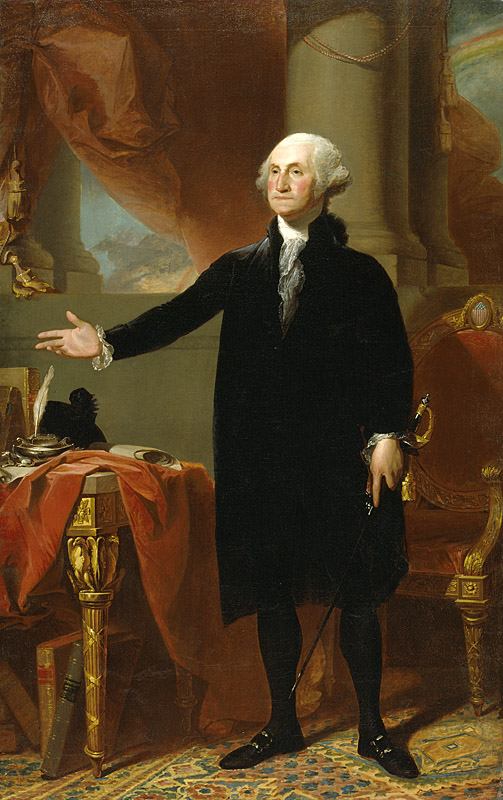
My friends and American countrymen, as the United States of America approaches the 250th anniversary of its Declaration of Independence in 2026, it is fitting that we pause to consider a question which, though seldom asked, carries enormous weight: would this republic exist at all without the life and character of one man, General George Washington? I submit to you that the evidence, drawn from primary sources and the testimony of Washington's own contemporaries, compels a sobering answer: it would not.
Let us begin where the republic itself began, on the field of war. From 1775 to 1783, Washington commanded a Continental Army that was chronically underfunded, perpetually undersupplied, and constantly on the verge of dissolution. At Valley Forge in the winter of 1777 to 1778, approximately 2,000 of his 12,000 soldiers perished from disease, cold, and starvation. Desertions were rampant. Enlistment terms expired faster than they could be renewed. Yet Washington remained. No other figure in the Continental Army possessed the combination of military credibility, personal fortitude, and political legitimacy required to hold that force together. Had Washington resigned, been captured, or been killed at any point during those eight years, there is no historical basis to believe any subordinate commander could have sustained the army long enough for France to enter the war or for Cornwallis to be cornered at Yorktown in 1781. The Revolution did not survive because of its army alone; it survived because one man refused to abandon it.
Consider, additionally, the events of December 26, 1776 — a night on which the Revolution was, by most reasonable assessments, already dying. After a string of demoralizing defeats, with enlistments set to expire on January 1, 1777, Washington led his exhausted men across the ice-choked Delaware River in a driving sleet storm and launched a surprise attack on the Hessian garrison at Trenton, New Jersey. The victory that followed did not merely capture prisoners. It restored enlistments, revived public confidence, and demonstrated to France and to the American people that the Continental Army remained a fighting force. Without the moral and strategic audacity of that single night's crossing, the Revolution may well have expired before the ink dried on the Treaty of Paris.
The military argument alone would be sufficient. But Washington's indispensability did not end on the battlefield; it extended, with equal force, into the constitutional order he was uniquely positioned to protect. On March 15, 1783, with peace negotiations underway and the Continental Army encamped near Newburgh, New York, a circle of discontented officers (unpaid, embittered, and encouraged by certain nationalist politicians in Congress) circulated an anonymous letter calling for a mutiny against the civil government. Washington arrived at the assembly unannounced. He addressed his officers with evident feeling, reminding them of what they would destroy if they proceeded. Then, as he prepared to read a letter from Congress documenting its financial straits, he reached into his pocket and put on a pair of spectacles, saying softly, "Gentlemen, you will permit me to put on my spectacles, for I have not only grown gray but almost blind in the service of my country." According to witnesses, many of the officers wept. The mutiny collapsed. Washington's surprise arrival, his address, and that single unrehearsed gesture caused the officers to see their wrongdoings, and they overwhelmingly put their faith back in the Confederation Congress. No other figure in the Continental Army commanded sufficient moral authority to produce that result. Had the conspiracy succeeded, the Continental Army would have seized governing authority over a nation that had just spent eight years and thousands of lives fighting to escape precisely that form of tyranny, and the Constitution, still four years from being written, would never have been conceived in a republic already ruled by its own generals. The republic was saved not by an institution but by one man's sacrifice made visible.
Nine months later, on December 23, 1783, Washington performed an act so extraordinary that it astonished the world. Having led the Continental Army to victory, at a moment when the army itself might well have supported his claim to permanent power, he appeared before the Continental Congress in Annapolis and surrendered his commission. His own words that day, preserved in the National Archives, were characteristically spare: "Having now finished the work assigned me, I retire from the great theatre of action; and bidding an affectionate farewell to this august body, under whose orders I have so long acted, I here offer my commission, and take my leave of all the employments of public life." The reaction across the Atlantic was immediate. Upon learning of Washington's resignation, King George III reportedly told the American-born artist Benjamin West: "If he does that, he will be the greatest man in the world." The king understood what Washington had done. In an age when military conquest routinely produced permanent rulership, Washington had established by personal example that republican self-government could survive the most dangerous moment in any republic's life: the moment of victory, when the armed man who won the war must decide whether to keep or to relinquish his power.
That demonstration, however, was not yet complete. Washington's indispensability did not confine itself to the battlefield or to the preservation of civilian authority against military conspiracy. It extended, with equal consequence, to the very document upon which the American republic rests. When the Virginia legislature first appointed Washington as a delegate to the Constitutional Convention of 1787 in Philadelphia, he declined, preferring to remain in retirement at Mount Vernon. It required the persistent persuasion of James Madison and other prominent figures to convince him that his presence was essential, and Washington's attendance proved essential in ways no other delegate could have replicated. To many of those assembled, and especially to Madison, Washington's mere presence boded well for the Convention, for the illustrious general gave to the gathering an air of importance and legitimacy. The delegates unanimously elected him to preside over the proceedings, the only vote of that kind the Convention produced. He said little during four months of contentious debate, yet his authority over the room was total. Factions that might otherwise have dissolved the Convention in acrimony held their positions at the table in deference to the man who sat at its head. When the delegates finally reached agreement on September 17, 1787, James Monroe, in a letter to Thomas Jefferson, summarized Washington's role with the economy of a verdict: 'Be assured, [Washington's] influence carried the government.' Without Washington in Philadelphia, there is no credible historical basis to believe the Convention would have produced a ratifiable constitution, or that the thirteen fractious states would have trusted its product sufficiently to adopt it.
Washington's indispensability extended, finally, into the presidency itself. The Constitution ratified in 1787 was, as Washington recognized with characteristic precision, a document of general principles rather than operational detail. In a letter to Catharine Macaulay Graham dated January 9, 1790, drawn from the National Archives and the Papers of George Washington, he wrote: "The establishment of our new Government seemed to be the last great experiment, for promoting human happiness, by reasonable compact, in civil Society... In our progress towards political happiness my station is new; and, if I may use the expression, I walk on untrodden ground. There is scarcely any action, whose motives may not be subject to a double interpretation." Washington understood that he was not merely executing a government; he was inventing one. He believed the precedents he set must make the presidency powerful enough to function effectively in the national government, while at the same time showing no tendency toward monarchy or dictatorship. His choices (the cabinet structure, the principle of executive neutrality in foreign affairs, and above all, the voluntary surrender of the presidency after two terms in 1797) established the constitutional customs on which the republic operated for generations. A less disciplined man in that office could have bent the Constitution toward personal rule before the republic had grown strong enough to resist it.
My friends and American countrymen, the evidence presented here was not gathered to flatter a monument or to indulge in comfortable mythology. It was gathered because the republic we inhabit was not inevitable. It was contingent, dependent at every critical juncture between 1776 and 1797, upon the choices of a single man who consistently chose the republic over himself. At Valley Forge, he chose to remain. At Trenton, he chose to advance when every prudent calculation counseled retreat. At Newburgh, he chose to confront a conspiracy with his own conscience rather than a court martial. At Annapolis, he chose to surrender power that no law required him to surrender. And in 1797, he chose again to walk away from an office that a grateful and exhausted nation might well have given him for life. Each of these choices was made in the absence of any institutional guarantee that the republic would survive. Each of them was, in the fullest sense, a free act. It is therefore not sentiment but evidence which compels the conclusion that without George Washington, the United States of America, as a constitutional republic under the rule of law, would not exist.
Long live the spirit of George Washington and the Republic of the United States of America!
Stay informed!
Join a community of engaged patriots passionate about liberty, good governance, and strengthening U.S.-Philippine relations. By subscribing to Marcial's Law, you’ll receive exclusive insights and updates on policies that shape the future of both nations. Be part of the conversation that challenges the status quo and advocates for a return to constitutional principles. Subscribe now and never miss a critical update!






[…] LATEST18 Indisputable Reasons America Remains Exceptional at 250 2The Full Ledger: Why America Remains the Philippines' Greatest Ally 3Would America Exist Without George Washington? […]