I seek to empower people by giving them something to ponder.

By Marcial Bonifacio
7-24-26
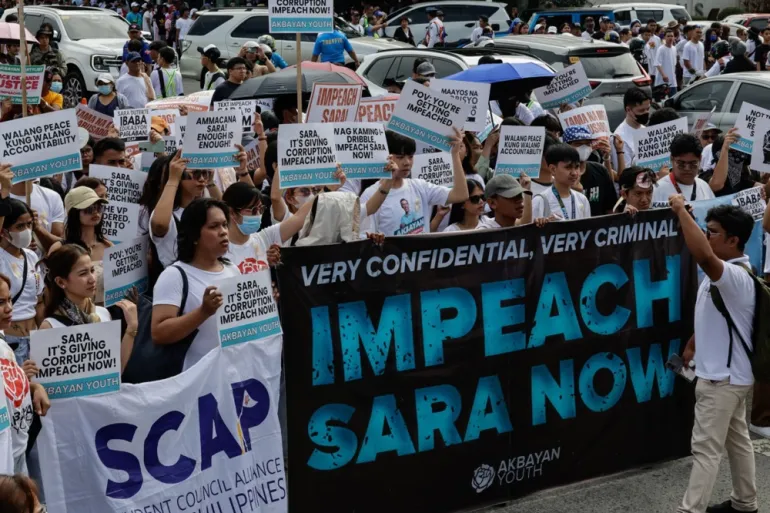
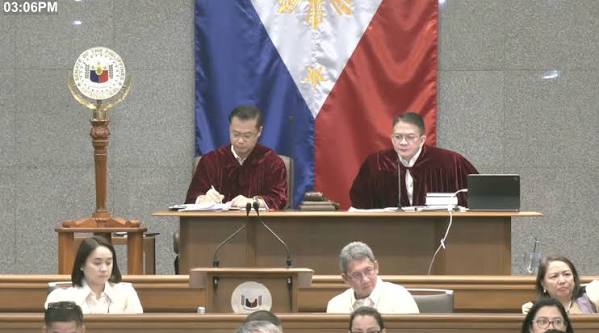
My friends and countrymen, this is an explainer for Vice President Sara Duterte's impeachment trial, which I mentioned in The Case for the conviction of Vice President Sara Duterte. On the seventh day of the trial, Senator Pia Cayetano raised an objection that many watching on television or scrolling through social media likely found confusing. She spoke of a "poisonous tree" and its "fruit." No plant was on trial, of course. She was invoking a legal doctrine, and it deserves an explanation in plain language before any citizen forms a judgment on whether her objection was sound. Her brother, Senator Alan Peter Cayetano, raised a second and equally important legal question days later, one that turns on a distinction many citizens use loosely without realizing it carries a precise legal meaning: the difference between wealth that is merely unexplained and wealth that is proven ill-gotten. Both objections deserve a plain explanation before any citizen judges whether they were sound.
What the Doctrine Actually Says
The fruit of the poisonous tree doctrine holds a simple idea: if the source of a piece of evidence was obtained illegally, then anything that grows out of that evidence, anything discovered because of it, is likewise tainted and should not be used in court. The tree is the illegal act. The fruit is everything that comes after it. If the tree is poisoned, the fruit cannot be clean, no matter how useful or damning it turns out to be.
Consider an everyday illustration. Suppose a police officer breaks into a person's home without a warrant and finds a ledger detailing a crime. If a court later allows that ledger into evidence, it rewards the illegal entry. Worse, if that ledger leads investigators to a second location, and a second illegal search turns up a weapon, the doctrine says the weapon cannot be used either, because the entire chain of discovery began with an unlawful act. The remedy is not to punish the officer alone. It is to remove the incentive for any officer to break the law in the first place, by making sure the fruits of that violation are worthless in court.
Where This Doctrine Comes From in Philippine Law
The concern is older than the Philippine Republic itself, and older than the United States as well. In 1761, a Boston lawyer named James Otis stood before a colonial court and argued against British "writs of assistance," general warrants that let customs officials search any home or warehouse without specifying what they sought. A young John Adams watched from the courtroom and later wrote that American independence was born that day. The grievance ran deep enough that the founders wrote its remedy directly into the Fourth Amendment, requiring every warrant to describe with particularity the place to be searched and the person or thing to be seized.
The Philippine Supreme Court applied this very reasoning in Stonehill v. Diokno, a landmark 1967 ruling that struck down evidence gathered against an American businessman under warrants so broad they authorized searches of nearly anything, anywhere, described only in general terms. The Court ruled that such general warrants violated the constitutional right against unreasonable searches, and that evidence obtained under them could not be used, regardless of what that evidence revealed.
There is a striking irony worth noting plainly. The very case Senator Cayetano invoked was decided against the father of the current lead private prosecutor questioning witnesses in this trial, Chel Diokno. The same precedent, coincidentally, was raised by Chief Justice Renato Corona's defense team during his own impeachment trial in 2012.
What Senator Cayetano Actually Argued
Senator Cayetano's specific objection concerned the Anti-Money Laundering Council, or AMLC, and whether it had legal authority to disclose Vice President Duterte's financial records to the House of Representatives committee that was investigating her. Her argument, reduced to its simplest form, was this: if the AMLC had no legal basis to hand over that information in the first place, then the tree from which the entire financial case grew was poisoned, and everything built on top of it, the House committee's findings, the subpoenas, the allegations, should not be admitted.
The Prosecution's Answer
Prosecutor Chel Diokno offered a narrower reading of the relevant statute. He argued that Section 8-A of the Anti-Money Laundering Act was written to prevent individual AMLC officials from leaking financial information on their own initiative, not to block a subpoena issued by a lawful tribunal such as an impeachment court. A subpoena from a constitutionally recognized body, in his view, is a fundamentally different legal act than an unauthorized leak, and the poisoned-tree analogy does not stretch to cover it.
A Related Objection: Two Different Kinds of Wealth
Senator Alan Peter Cayetano raised his own objection in the same exchange, pressing the prosecution on whether the House had actual evidence before it began investigating, or whether it went looking for evidence only after deciding Duterte was guilty. His questioning did not stop there. He pushed further into a distinction worth understanding on its own, since it turns on two terms that sound similar but mean very different things in law. He asked Diokno directly, "Do you have the evidence, or are you fishing for the evidence?" His deeper concern was whether a mere gap between what Duterte declared as income and what she actually owned was enough, by itself, to justify subpoenaing years of her financial life before she had any chance to explain that gap herself.
Here is the distinction his question rested on. Unexplained wealth is a description. It simply means a public official's recorded wealth exceeds what her lawful income can account for, and no explanation has yet been given for the difference. Ill-gotten wealth is a conclusion. It means that gap has been examined and found to come from an unlawful source. Cayetano's worry was that treating the first term as though it already proved the second would let prosecutors search first and justify the search later.
Diokno's answer rested on a specific law, Republic Act No. 1379, which governs the forfeiture of unlawfully acquired property. That statute holds that when a public official's wealth is manifestly disproportionate to her lawful income, and she cannot explain the difference, the law presumes the excess was unlawfully acquired, unless she rebuts that presumption with an explanation of her own. Diokno offered a simple illustration: wealth traceable to an appreciated land sale would be explained wealth, and only the records themselves, not an assumption of guilt, would reveal which kind Duterte's is. His closing line to the court captured the whole exchange: "That's precisely why, your honor, they call it 'unexplained wealth.'" The term itself, in other words, is not an accusation. It is the legal trigger that requires an official to speak up before the presumption against her hardens into something worse.
The Senate impeachment court, weighing all of these arguments, ruled in favor of issuing the subpoenas. Both objections were heard fully and fairly. Neither prevailed at this stage.
Two Honest Perspectives
A fair explainer must present both sides as their strongest advocates would, and let the reader judge.
Those who see merit in Senator Cayetano's objection point out that constitutional protections against unreasonable searches exist precisely to restrain the government when it is investigating the powerful, not only the powerless. If institutions can quietly hand over any citizen's financial data without proper legal basis, then no one, prominent or ordinary, is protected. A senator raising this objection loudly and publicly, they argue, does the nation a service by forcing prosecutors to prove their evidence was gathered lawfully rather than assuming lawfulness because the target is unpopular.
Those skeptical of the objection counter that Senators Pia Cayetano and Alan Peter Cayetano are widely known allies of the Duterte family, and that raising a procedural objection this technical, this late, and this specific to a single disclosure mechanism, functions as a delay tactic rather than a genuine constitutional concern. They further note that an impeachment court is not a criminal court bound by the same exclusionary rules developed for criminal prosecutions, and that Congress's oversight power to investigate a public official's conduct in office operates on a different constitutional footing than a police officer's power to search a private home.
A similar split exists over Senator Alan Peter Cayetano's unexplained-wealth question. Those sympathetic to his concern argue that due process matters even for the powerful, and that no official should have years of financial records exposed on the strength of an income gap alone, without first being asked to explain it. Those unpersuaded reply that Republic Act No. 1379 was written precisely to place that burden on the official, not on the accuser, and that Diokno's answer did not sidestep the law but applied it exactly as the legislature intended: the presumption exists so that citizens are not left waiting years for proof that may never surface if the official controls all the relevant records.
Both positions rest on real legal principles. Neither is frivolous. The impeachment court chose to allow the evidence, but that ruling settles the immediate procedural question. It does not settle the broader debate over how far this doctrine should reach into congressional investigations, a debate legal scholars will continue long after this trial concludes.
Why This Matters to Every Filipino, Not Just Politicians
Here is the doctrine's practical relevance for readers who have never appeared before a Senate impeachment court and likely never will. The same protection Senator Cayetano invoked for Vice President Duterte is the protection an ordinary Filipino would invoke if police searched a home without a warrant and used what they found to build a criminal case, or if a barangay official accessed a person's bank records without legal authority and passed them to a rival for political leverage. It is the same principle cited in countless drug war cases nationwide, where defense lawyers have argued that evidence planted or seized without a valid warrant should never have reached a courtroom. It is the same principle a small business owner would rely on if a local government unit obtained financial records through an improper channel and used them to justify a politically motivated tax investigation.
The unexplained-wealth presumption has its own everyday counterpart, one many Filipinos already recognize by another name: the lifestyle check. When a barangay captain drives a vehicle worth many times her declared salary, or a customs employee builds a house no ordinary government paycheck could finance, ordinary citizens invoke the very same logic Diokno used in the impeachment court, that an unexplained gap between income and lifestyle is itself grounds for scrutiny, not proof of innocence until someone else proves the theft. This is not a special rule invented for a vice president. It is the same rule a barangay assembly can invoke against its own captain.
The doctrine exists because the government's power to gather evidence must be paired with a government that follows its own rules while gathering it. When a senator invokes it on behalf of a vice president, and a public school teacher's lawyer invokes the identical principle defending a student wrongly implicated by an illegal search, they are standing on the same constitutional ground. That ground either holds for everyone or it protects no one.
My friends and countrymen, understanding these two doctrines is not merely an academic exercise for lawyers and senators. Each is one of the walls the Constitution and our laws have built between citizens and the power of the state, walls that stand whether the person behind them is a vice president or a jeepney driver.
Long live the rule of law, and long live the Republic of the Philippines!
Stay informed!
Join a community of engaged patriots passionate about liberty, good governance, and strengthening U.S.-Philippine relations. By subscribing to Marcial's Law, you’ll receive exclusive insights and updates on policies that shape the future of both nations. Be part of the conversation that challenges the status quo and advocates for a return to constitutional principles. Subscribe now and never miss a critical update!