I seek to empower people by giving them something to ponder.
By Marcial Bonifacio
11/7/26
My friends and countrymen, the anti-colonial critique of American governance in the Philippines has long cast Governor-General Leonard Wood and Justice George Malcolm as instruments of colonial suppression, men whose governance set at naught the aspirations of an entire people. What that critique omits is evidence of a different kind: that Wood's most relentless political adversary praised his character upon his death, that the Philippine legislature formally adopted Malcolm as a Son of the Philippines in 1955, and that the Filipino framers who suffered under Wood built a presidency more powerful than the office he held. A full accounting of history demands that we apply the same standard of evidence to those we defend that we apply to those we condemn, and by that standard, neither Wood nor Malcolm deserves the title of tyrant.
Governor-General Leonard Wood
Governor-General Wood arrived in the Philippines in October 1921 not as a conqueror but as a reformer summoned to address a genuine crisis. The administration of his predecessor, Governor-General Francis Burton Harrison, had presided over a catastrophic financial collapse. After a serious fiscal crisis erupted in 1920 and 1921 in the wake of World War I, the Philippines suffered institutional failures in the Philippine National Bank, corruption in the civil service, and a deterioration in fiscal standing that Harrison himself privately acknowledged before departing.
Wood found, in the candid assessment preserved in Philippine historical records, those conditions riddled with inefficiency, graft, and nepotism. Economic reforms implemented during his administration helped the Philippine economy recover from that crisis. Under Wood's governance, the Philippine National Bank was stabilized, government expenditure was brought under discipline, and the fiscal standing that Harrison's policies had eroded was restored. This is not American apologetics; it is the documented outcome of his governance.
The specific charges in the Filipino Grievances document deserve honest treatment. Several of them, including the Khaki Cabinet appointments, the manipulation of the appropriations process, and the disregard for Senate confirmation requirements, were genuine violations of the Jones Act of 1916. Filipino leaders were right to object, and their objections were legally grounded.
He served until he died in office in August 1927; no court removed him, no Congress recalled him, and no legal proceeding condemned his administration. Even Manuel L. Quezon, who was Wood's most relentless political adversary and the man who led the cabinet resignations of 1923, rendered this assessment of Wood upon his death: "He was a hard working chief executive and always determined in his purpose to do the right thing as he saw it." That verdict came from an opponent, not an admirer, and it carries the weight that only an honest enemy can provide.
Additionally, Judge Guillermo Guevara, one of the more sober Filipino legal voices of that era, offered this precise summary: "We had during the Wood regime an interlude of business-like administration at the expense, often, of Philippine autonomy." Business-like administration at the expense of autonomy is a legitimate grievance.
What distinguishes it from despotism, however, is a distinction the evidence itself makes plain: every one of Wood's violations was openly contested through legitimate channels, documented in formal grievances, carried to Washington by elected representatives, debated in a free press, and placed before the United States Congress for review. No actual tyranny permits the governed to publish, transmit, and politically contest the ruler's conduct through the ruler's own institutional framework while remaining free to do so. It is not the record of a despot.
Justice George Malcolm
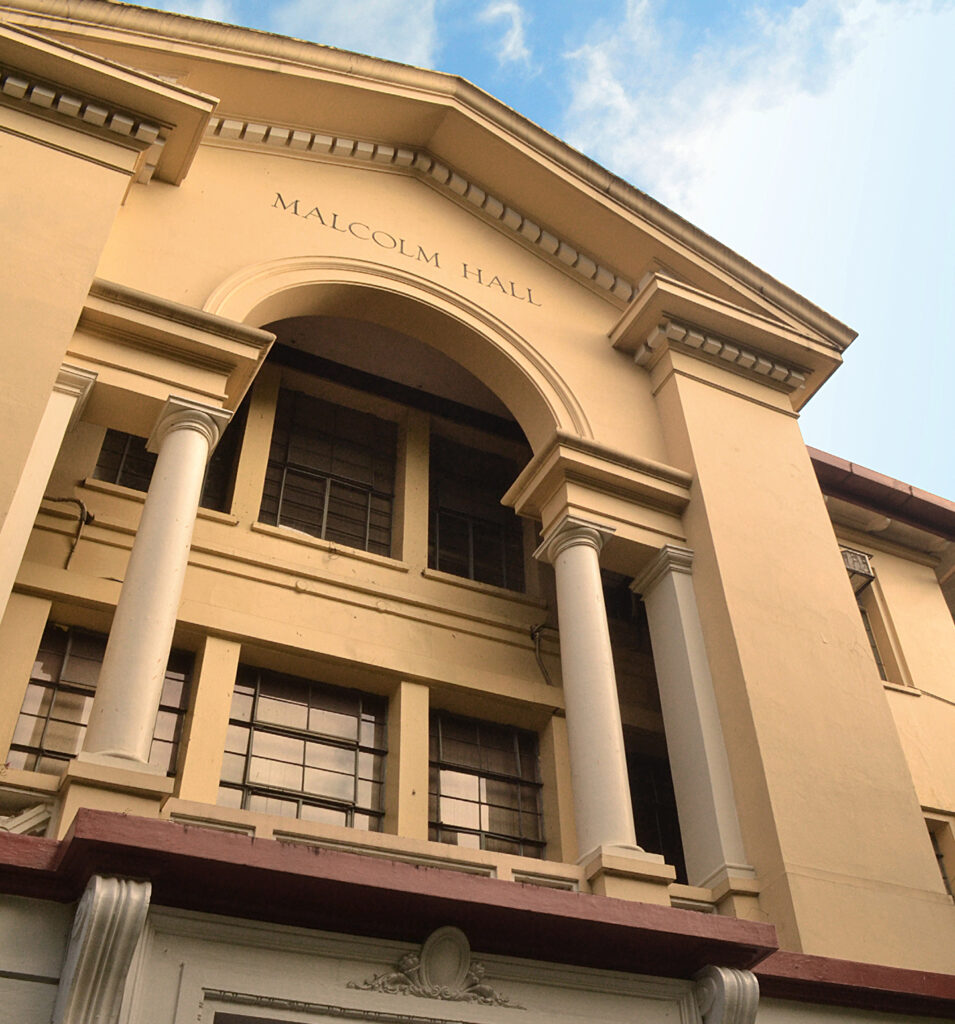
Justice George Malcolm presents an entirely different case. His critics have treated him as a shadowy figure who corrupted Filipino legal development by inserting colonial ideas into it. The historical record does not support that portrayal. Malcolm founded the University of the Philippines College of Law, the institution whose graduates produced the Constitution and three Philippine presidents. Filipino constitutional scholar Joaquin Bernas, a Jesuit and one of the Philippines' most respected legal minds, described Malcolm as "the man who more than any single American contributed most to early constitutional development in the Philippines." That judgment comes from a Filipino scholar of the postcolonial era, writing without any obligation to be generous toward an American administrator.
His ruling in Villavicencio v. Lukban (1919) went directly against executive overreach, finding that no government official, regardless of public health justifications, could deprive any person of liberty without lawful process. His ruling in Government v. Springer (1927), though it limited the Philippine Legislature's control over government corporations, was upheld by the United States Supreme Court in 1928, confirming it as a legally sound application of separation-of-powers doctrine. That doctrine had been derived from the United States Constitution itself and applied consistently across American jurisprudence long before it reached the Philippines; Malcolm did not construct it to disadvantage Filipino legislators, but applied it as written, to a colonial situation where its structural consequences were unavoidably asymmetric.
The Rubi v. Provincial Board of Mindoro ruling of 1919, which upheld the forced settlement of Manguian indigenous people, reflects the paternalistic consensus of its era and is troubling by modern standards. The Philippine legislature, however, rendered its own final verdict on Malcolm in 1955 by passing Republic Act 1386 to adopt him formally as a Son of the Philippines and to confer upon him the rights of Philippine citizenship. These are not the honors a people bestow upon a tyrant.
What American Rule Actually Built
The case for Wood and Malcolm does not rest on the absence of tyranny alone. American colonial administration produced concrete benefits for ordinary Filipinos that no available alternative would have delivered. In August 1901, approximately 540 American teachers arrived in Manila aboard the USS Thomas and were deployed throughout the archipelago to establish a free public school system; these teachers, known as the Thomasites, built the Philippine Department of Public Instruction and helped lift Filipino literacy from below ten percent under Spain to over sixty-five percent by the end of the American period. The full account of that transformation, from enrollment figures to institutional legacy, is documented in my commentary The Full Ledger: Why America Remains the Philippines' Greatest Ally.
Two years later, the Pensionado Act of 1903 dispatched Filipino students to universities across the United States at government expense, with guaranteed positions in government service upon their return. Filipino historian Esteban de Ocampo described the program as "one of the wisest and most far-reaching steps taken" by American colonial administrators. The Pensionado Act remained the largest American scholarship program until the Fulbright Program was established in 1948, and it produced the generation of Filipino physicians, lawyers, educators, engineers, and politicians who built the professional foundations of an independent republic. Historian O.D. Corpuz, whose two-volume The Roots of the Filipino Nation is the most comprehensive account of this period by any Filipino scholar, documented how American colonial administration constructed the institutional framework without which Philippine independence in 1946 would have been an aspiration without structure. Wood and Malcolm did not design these programs; they administered and adjudicated within the same institutional framework that produced them, and the charge against them cannot be separated from the record of the system they served.
The Comparative Standard
The affirmative record of American colonial governance established, there remains a second standard that the anti-colonial critique consistently fails to apply: the full record of what other colonial powers did to their subjects.
Spain
The structural record of three hundred and thirty-three years of Spanish rule, including the absence of democratic institutions, public education, an independent judiciary, and any promise of independence, is documented in my commentaries The Case for Gratitude: Why American Colonialism Served the Philippines and The Founders You Erased: How the Anti-American Narrative Denies Filipino Agency in the 1935 Constitution. What those essays do not examine is the parallel that speaks most directly to Wood and Malcolm.
Jose Rizal was shot by a firing squad in 1896 precisely because he had asked, in print and in petitions, for reforms that Wood's Filipino critics were able to publish in a free press, present before a sitting legislature, and transmit to Washington through an elected resident commissioner. Under Spain, Rizal died for writing what under American governance Quezon was permitted to deliver in formal grievances to the United States War Department.
Britain
Consider what Britain did in its colonies during the same period. In April 1919, the same year Malcolm wrote his troubled Rubi ruling, British Brigadier General Reginald Dyer ordered his troops to open fire on unarmed civilians gathered at Jallianwala Bagh in Amritsar, India, killing between 379 and 1,000 people and wounding more than 1,200. Winston Churchill, then serving as Secretary of State for War, described Dyer's action before the House of Commons as "an extraordinary event, a monstrous event, an event which stands in singular and sinister isolation."
No Filipino cabinet member was shot for resigning in 1923. No Filipino legislator was fired upon for passing resolutions demanding Wood's recall. British India had no Jones Act promising independence; it had no Pensionado Program sending Indian students to British universities at government expense with guaranteed civil service positions upon their return. The British commitment to Indian independence emerged not from principle but from exhaustion after World War II, a war that began thirty years after the Jones Act had already committed the United States to Philippine independence as a matter of binding law.
Germany
Consider what Germany did to its own colonial subjects. Between 1904 and 1908, German General Lothar von Trotha issued formal extermination orders against the Herero and Nama peoples of German South West Africa. His command was recorded in writing: every Herero, with or without arms, was to be shot. The campaign that followed killed between 65,000 and 100,000 people through execution, starvation, dehydration, forced labor, and concentration camps.
A 1985 United Nations report classified these events as the first genocide of the twentieth century, and the German government officially acknowledged that designation in 2021. Germany had maintained ambitions in the Pacific before World War I, and the record of its governance in Africa is the most reliable guide available to what Philippine governance under Germany would have meant for the Filipino people.
Japan
Consider, finally, Japan. Filipino historians and survivors have documented what Japanese governance meant between 1942 and 1945: the Bataan Death March of April 1942, in which American and Filipino prisoners of war were forced on a sixty-five-mile march resulting in thousands of deaths from execution, exhaustion, and disease; the comfort women system, which subjected Filipino women to systematic sexual enslavement; and the Battle of Manila in February and March of 1945, documented in the written Japanese operational order preserved in the historical record, "All people on the battlefield with the exception of Japanese military personnel...will be put to death."
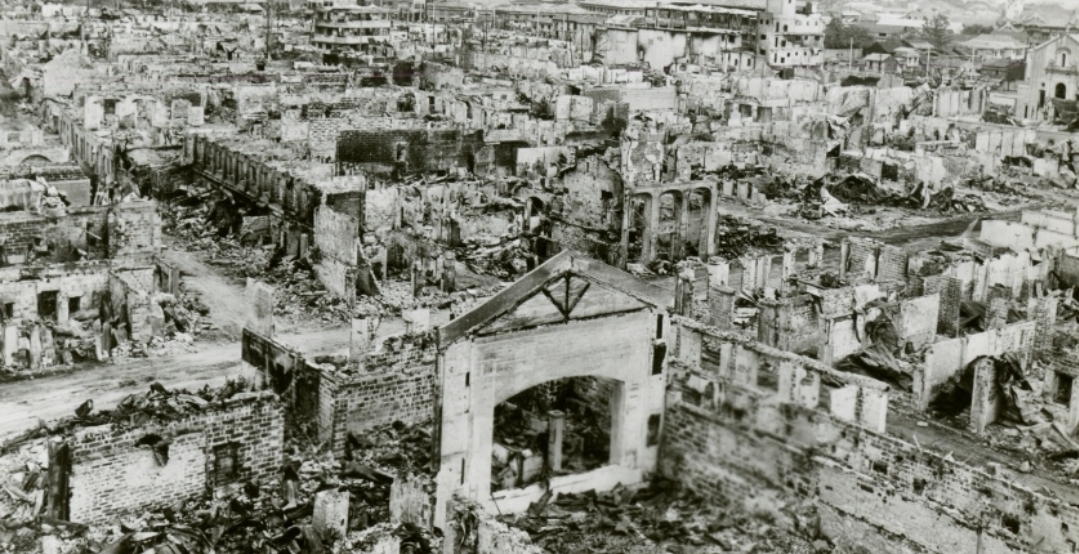
The full accounting of what that order produced, including approximately 100,000 Filipino lives lost in a single month and the reduction of Manila to the second most devastated Allied capital of the entire war, is documented in my commentary The Full Ledger: Why America Remains the Philippines' Greatest Ally. The Manila that Wood governed was a functioning city with a legislature, a Supreme Court, a free press, and a legally binding timetable for independence. The Manila that Japanese forces left in March of 1945 was rubble.
The colonial powers surveyed above provide the only honest frame for judging Wood and Malcolm. The question is not whether they governed without error; this commentary has not claimed they did. The question is whether the Filipino people, under any available alternative, would have been better governed, more justly treated, or more fully prepared for independence. No honest reading of the colonial record answers that question in the affirmative.
What the Constitution Reveals
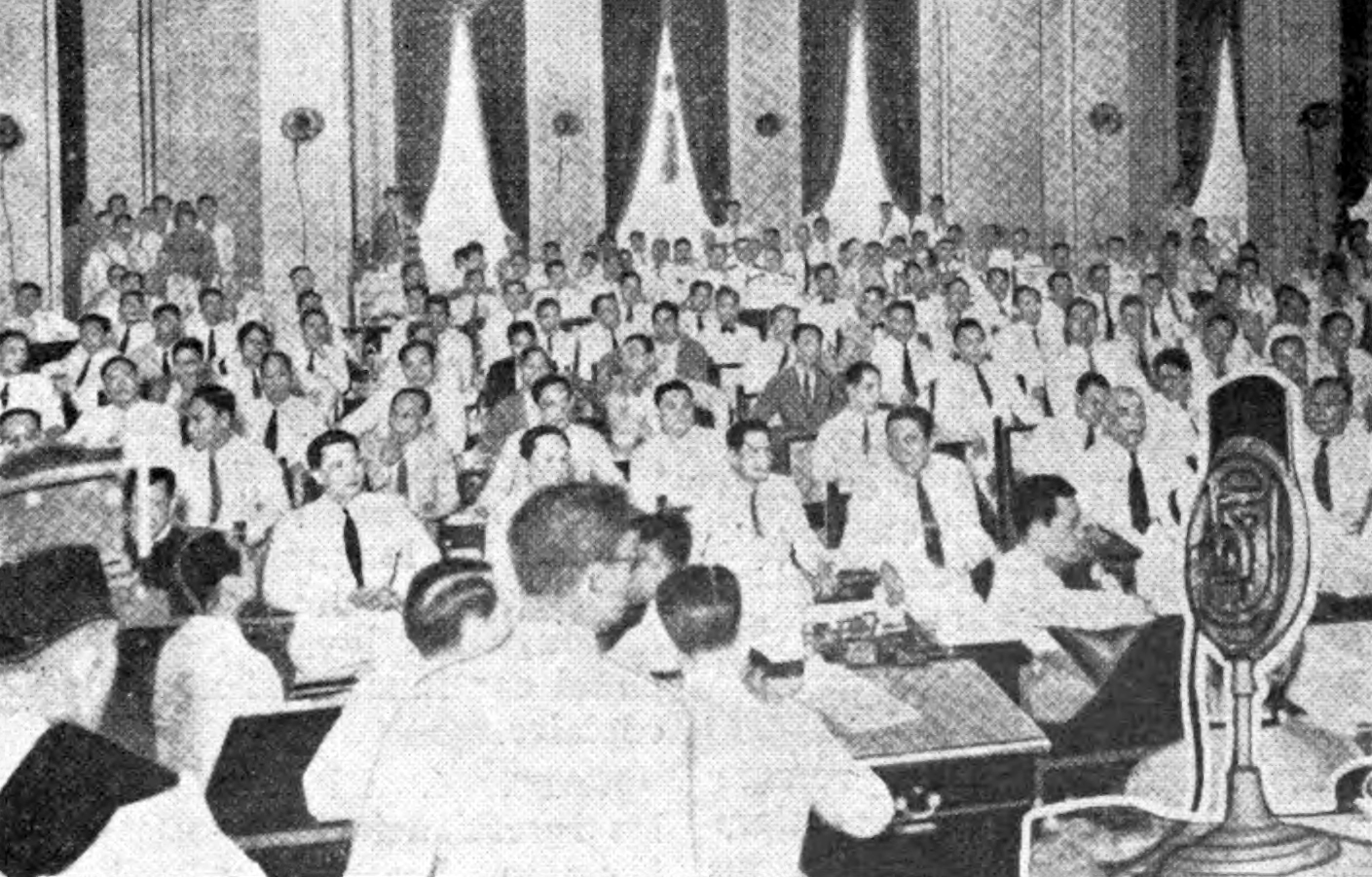
The constitutional record adds a final dimension that the comparative standard alone cannot supply. The same Filipino leaders who demanded Wood's recall then went on to draft a 1935 Constitution that concentrated far more power in a single executive than Wood himself had ever exercised. If Wood was a tyrant, the question that history demands we ask is why the men who suffered under him designed a presidency even stronger than the office he held.
The answer, as that constitutional record makes plain, is that Wood's governance was objectionable not because his power was absolute but because a Filipino did not hold it. To hold Wood to a standard that the framers themselves exceeded the moment they held the pen is not honest history; it is the application of a double standard that the constitutional record exposes. The comparative standard confirms what the constitutional record reveals: the Filipino nationalist movement, the very movement that American institutions had paradoxically equipped Filipinos to build, demanded the presidency for Filipinos rather than the abolition of the presidency, the legislature, and the courts that American colonial rule had established.
My friends and countrymen, the American colonial administration was not innocent. Among the documented atrocities of the Philippine-American War was Brigadier General Jacob H. Smith's order on Samar, issued in October 1901, to kill everyone over the age of ten and make the island "a howling wilderness," an order morally comparable to the written commands cited above against Germany and Japan. That parallel is not evaded here. It is answered by a distinction the other colonial powers cannot match: Smith was tried, convicted, and removed from the army in 1902; his sentence amounted to forced retirement rather than imprisonment. That the punishment fell short of the crime is a fair criticism of American military justice; what it does not change is the operative distinction: Smith faced institutional accountability within two years of his order, while every officer of every other colonial power cited in this commentary faced none whatsoever. Von Trotha faced no trial. Dyer was praised by the House of Lords. The Japanese officers who ordered the Manila massacre faced judgment only as war criminals after military defeat, not through the accountability mechanisms of their own government. The full accounting of the Philippine-American War, including Samar, belongs to my commentary The Full Ledger: Why America Remains the Philippines' Greatest Ally.
Wood violated the Jones Act in ways that Filipino leaders correctly identified and formally documented. Malcolm's Rubi ruling imposed a reservation policy on Manguian Filipinos that denied them the liberty the organic law was supposed to protect. These facts belong in any honest account of American colonial rule, and no defense of Wood or Malcolm should omit them.
Yet a tyrant does not build the law school that trains his subjects to argue against him in open court. A despot does not schedule his own departure. And a colonial power does not, as a matter of law rather than rhetoric, commit to Philippine independence while every other major colonial power of that era clung to its territories until forced out by war, rebellion, or collapse.
By the full comparative standard of colonial history, Wood and Malcolm were not despots. They were fallible administrators of a historically singular arrangement. The full scope of that arrangement, from the Jones Act's binding statutory commitment to independence fulfilled in 1946 to the institutional legacy it produced, is examined in my commentaries The Full Ledger: Why America Remains the Philippines' Greatest Ally, The Case for Gratitude: Why American Colonialism Served the Philippines, and The Founders You Erased: How the Anti-American Narrative Denies Filipino Agency in the 1935 Constitution. Were their governance and their rulings everything that the Philippines deserved? That is the question the full record now places before you.
Long live the Republic of the Philippines, and long live our alliance with the USA!
Stay informed!
Join a community of engaged patriots passionate about liberty, good governance, and strengthening U.S.-Philippine relations. By subscribing to Marcial's Law, you’ll receive exclusive insights and updates on policies that shape the future of both nations. Be part of the conversation that challenges the status quo and advocates for a return to constitutional principles. Subscribe now and never miss a critical update!